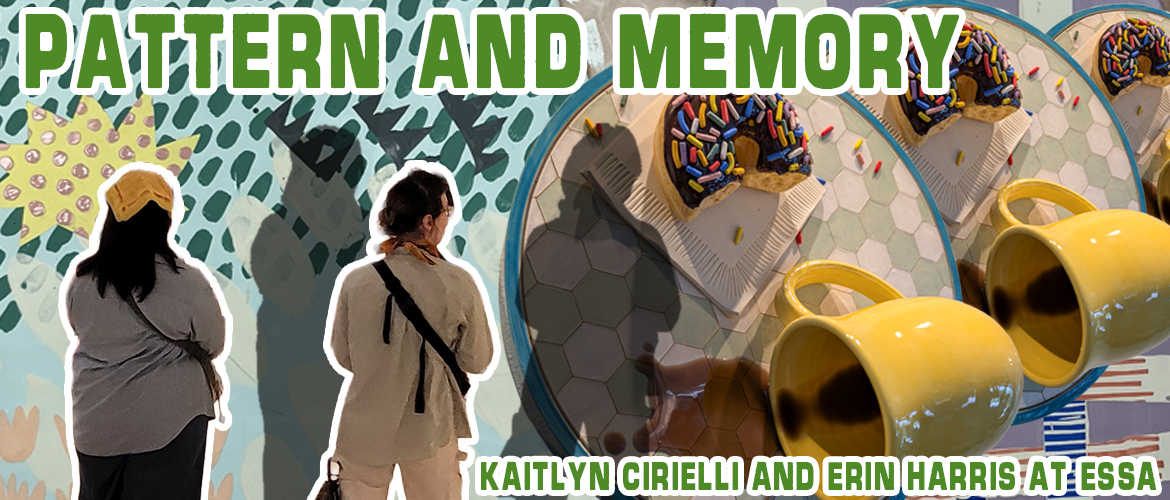
Looking back at Kaitlyn Cirielli and Erin Harris’s time as Artists in Residence at ESSA
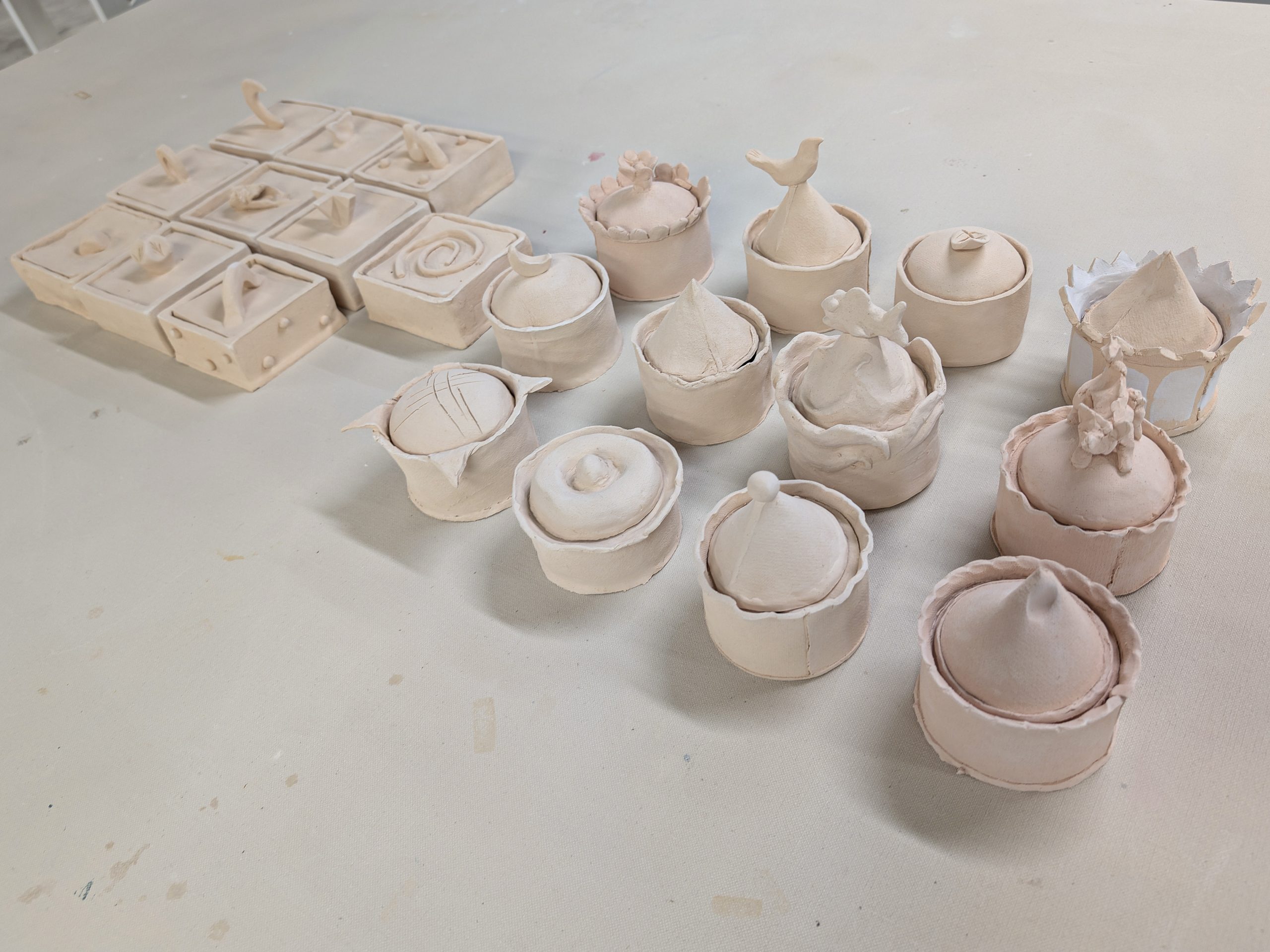
For seven weeks this summer, the shelves of ESSA’s Ceramics Studio filled with patterned vessels, ceramic snacks, experiments, tests, and works in progress. Spring & Summer 2026 Artists in Residence Kaitlyn Cirielli and Erin Harris arrived on May 30th with distinct ideas they wanted to pursue and the rare gift of uninterrupted time to pursue them.
By the time their residency concluded on July 18th, each had developed a new body of work shaped by repetition, experimentation, and the conversations that happen when artists share a studio. Their work looked very different, but both artists approached clay as a way to make familiar experiences newly visible.
Check out the video below for a closer look at the Residency Reception Show & Sale:
Pattern Takes Shape
Kaitlyn Cirielli came to ESSA from Providence, Rhode Island, with a practice grounded in fine art, contemporary sculpture, ceramics education, and accessible studio methods. She holds a BFA in Ceramics and a master’s degree in Teaching + Learning in Art and Design from the Rhode Island School of Design.
Her residency built on techniques she began developing while working as a ceramics technician and teacher in a nonprofit artist collaborative for adults with developmental disabilities. In that setting, she explored ways to adapt moldmaking and production pottery processes so artists with a wide range of abilities could participate more fully.
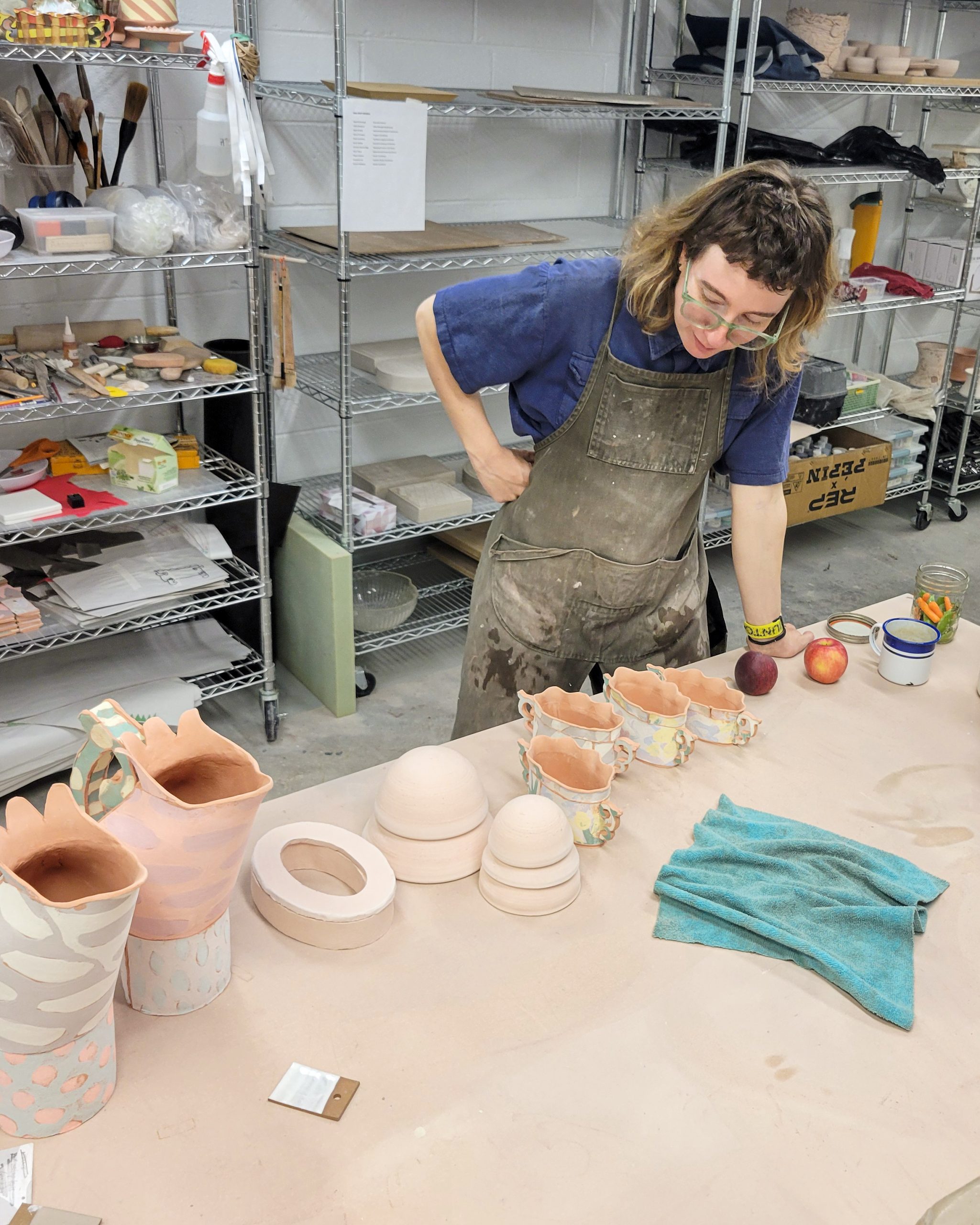
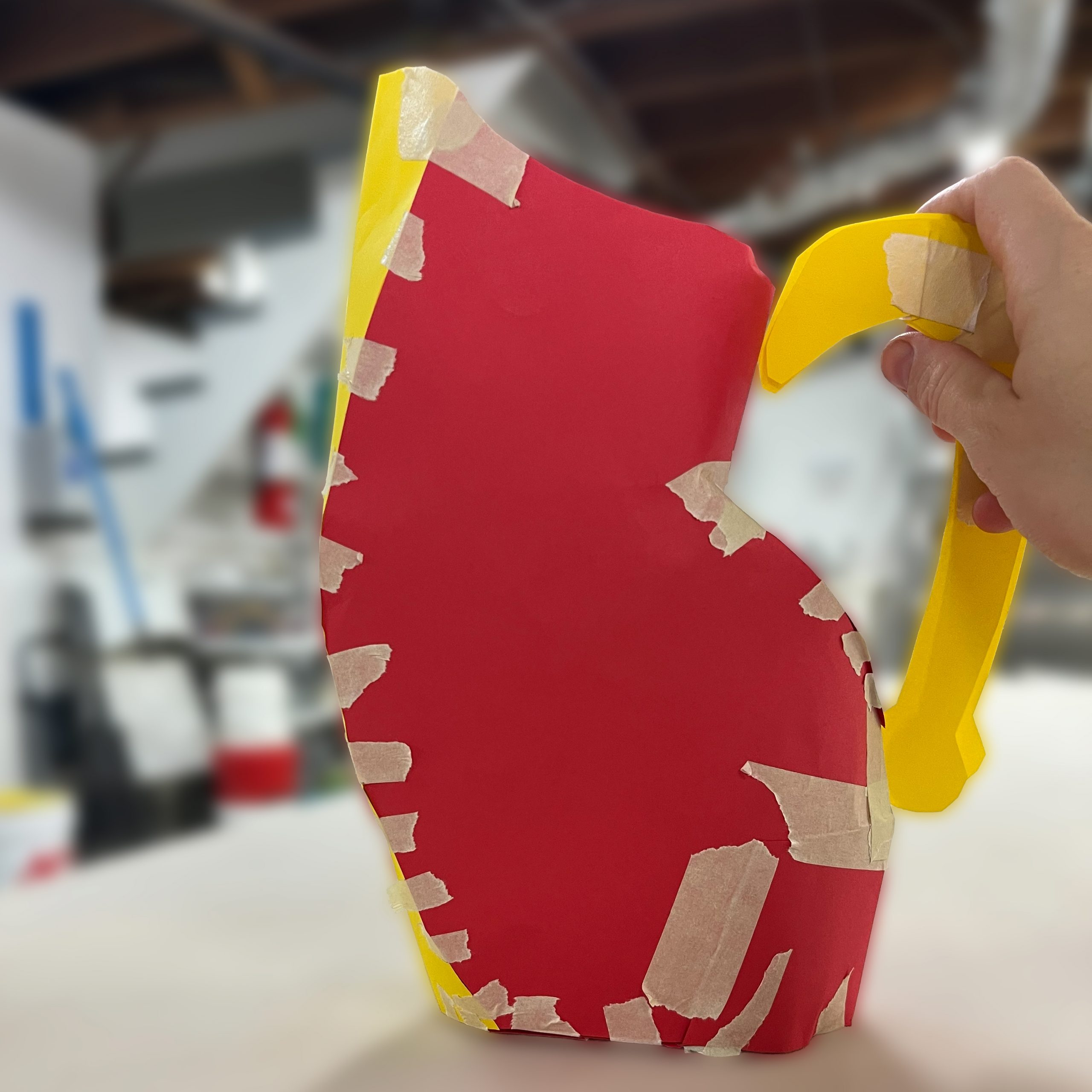
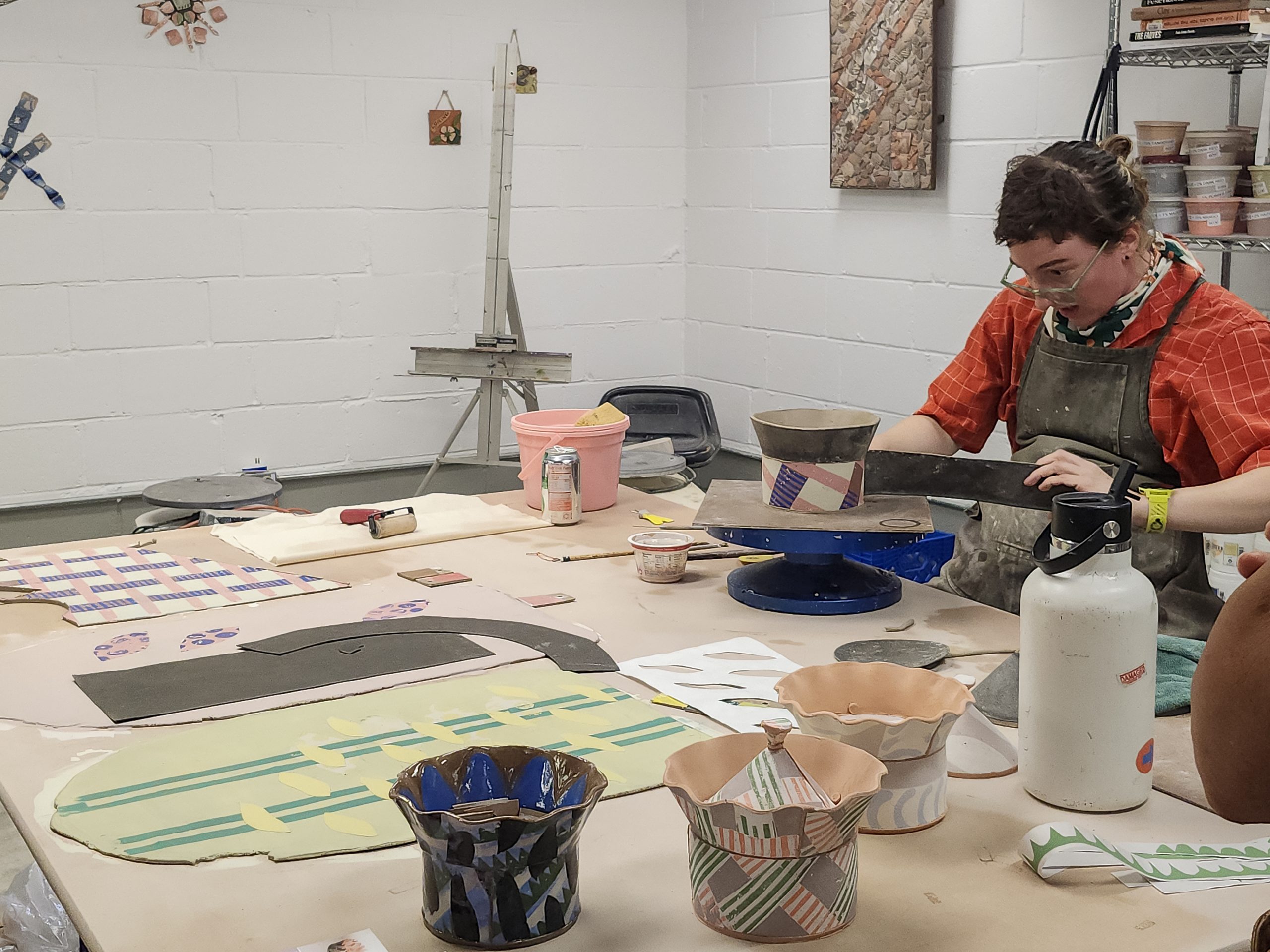
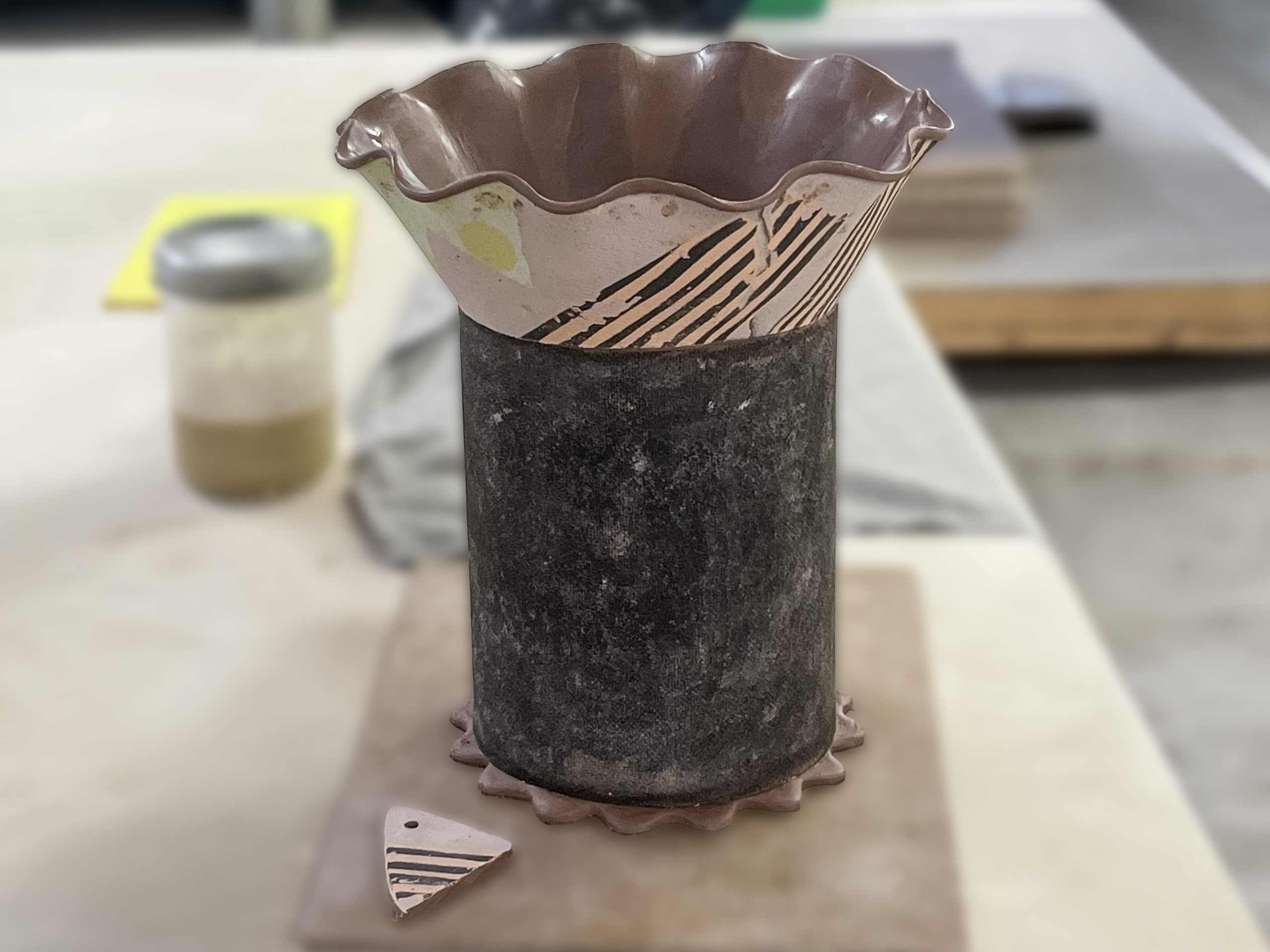
At ESSA, Kaitlyn used tarpaper templates to support wet clay during construction. This allowed her to work quickly with large, underglaze-painted slabs, cutting and assembling them much like pieces of patterned fabric. The templates gave the clay enough structure to move off the table and into volume, becoming functional sculptures whose forms and surfaces were developed together.
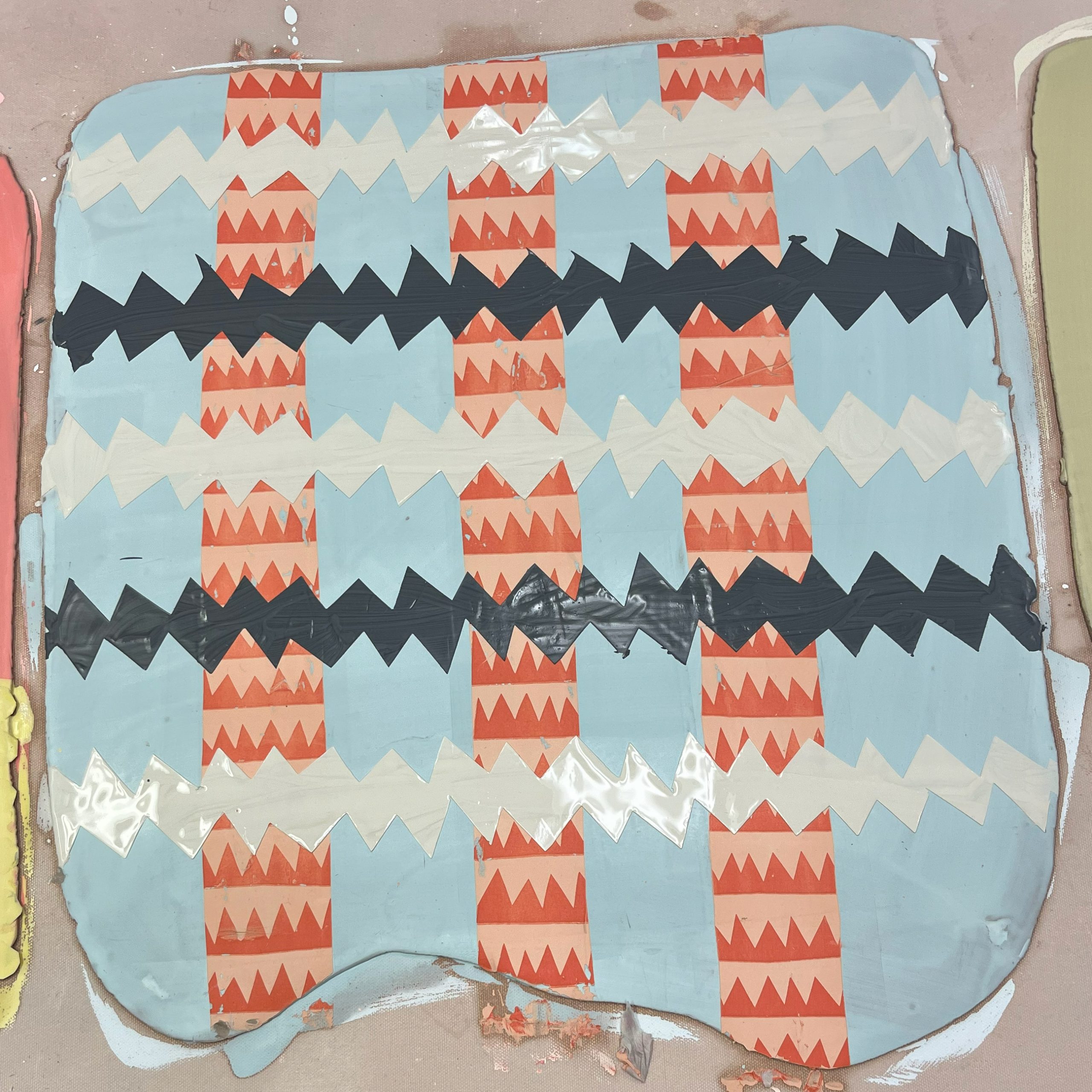
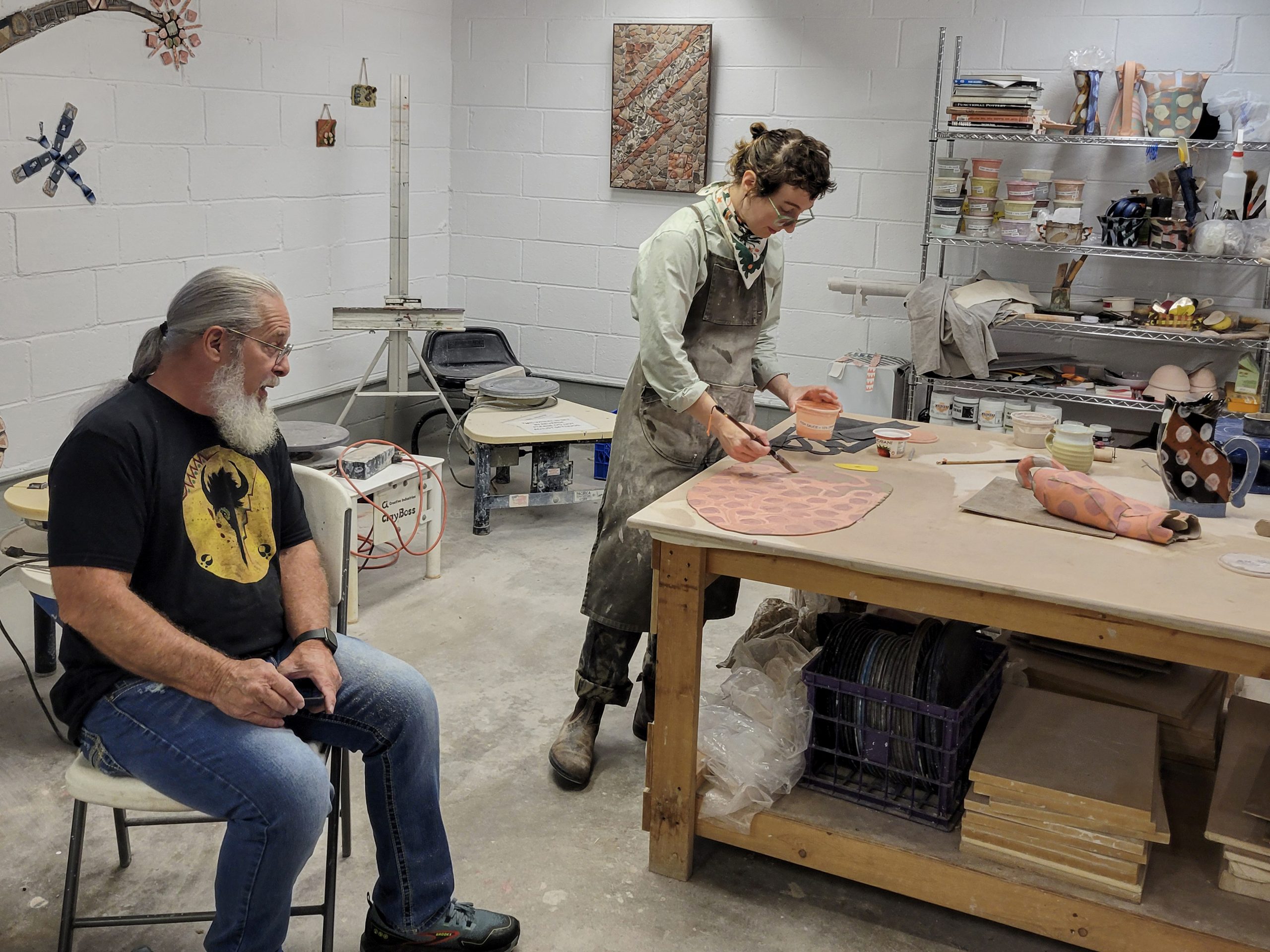
Kaitlyn painted repeating patterns across a flat slab of clay before cutting and assembling the vessel.
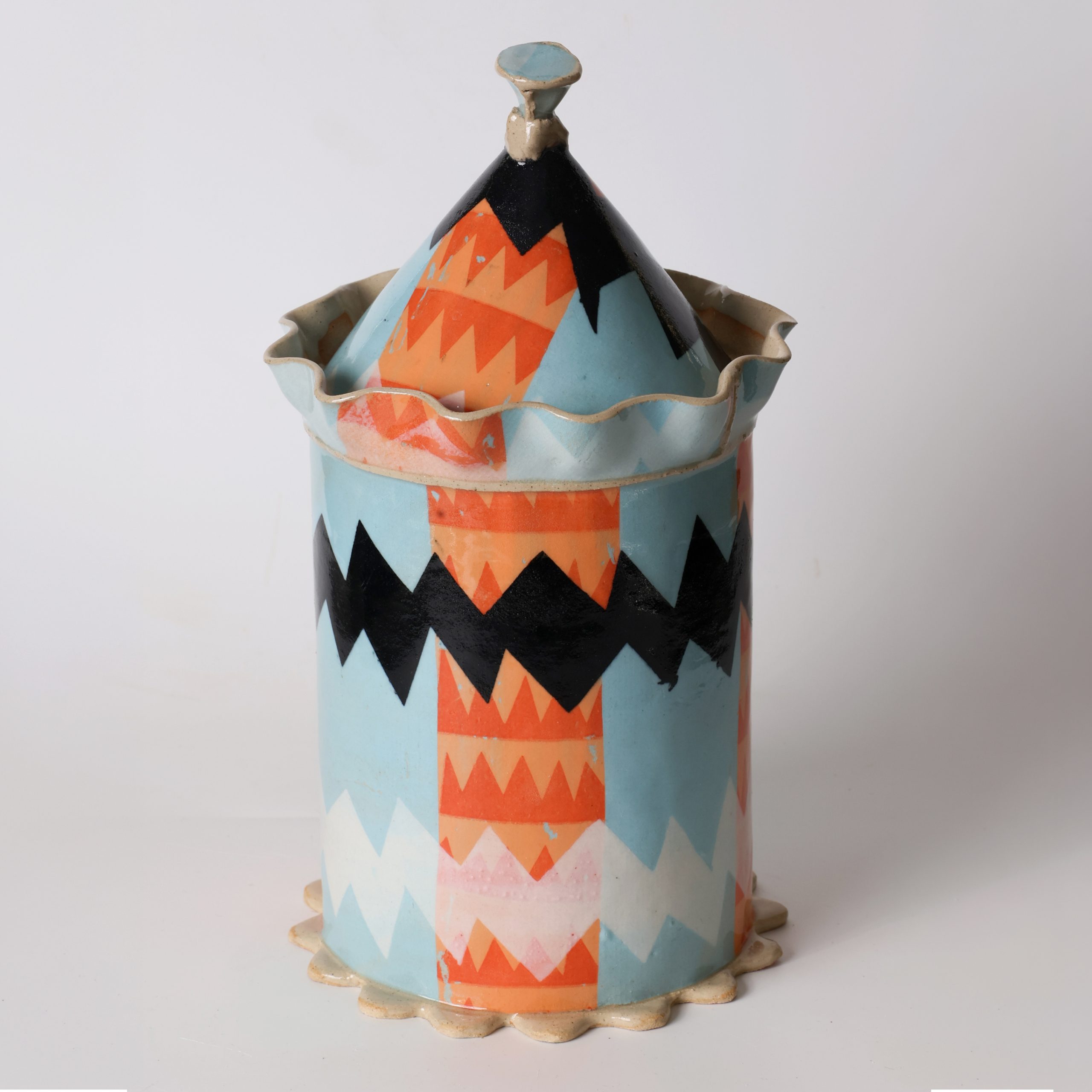
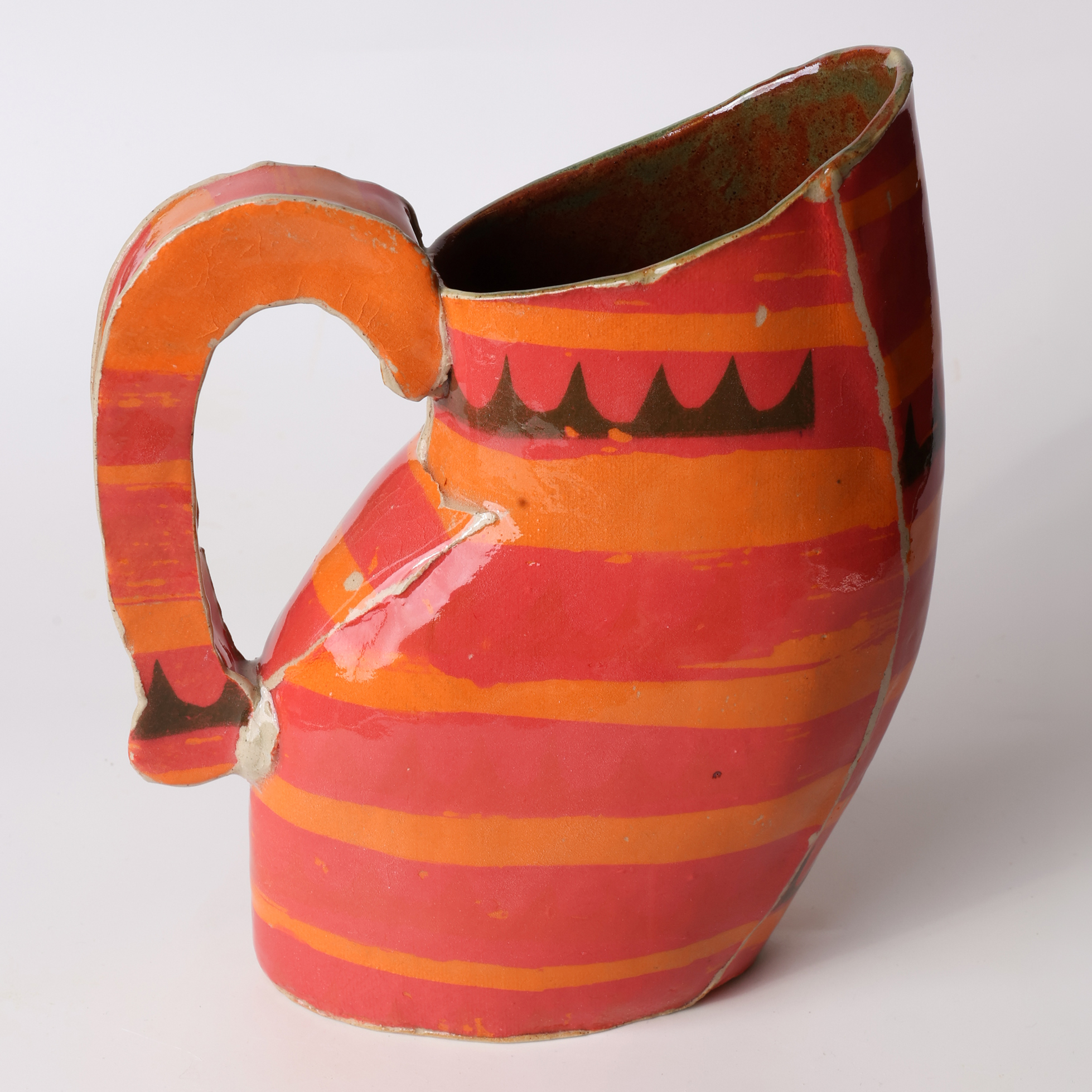
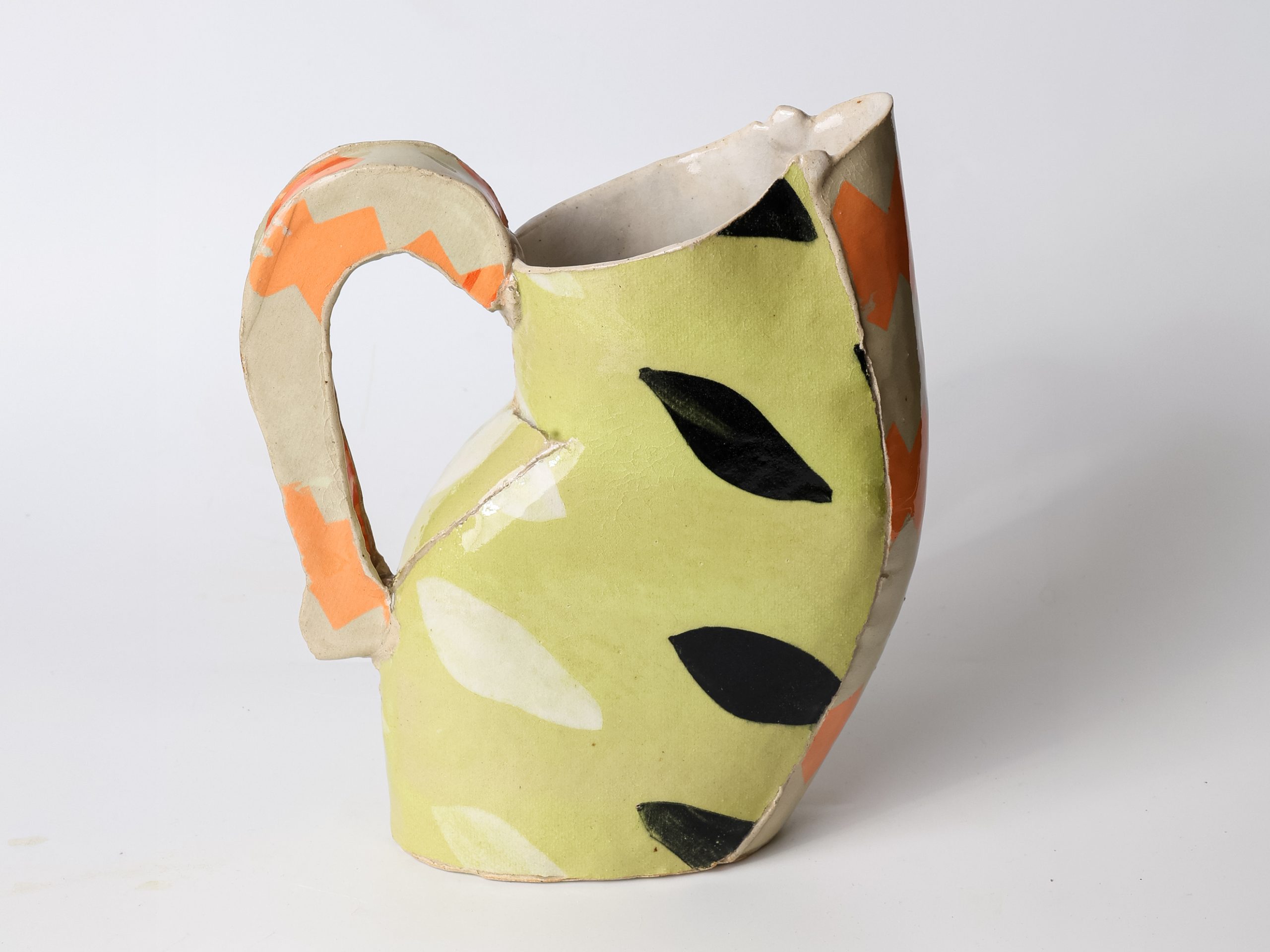
The finished vessel shows how Kaitlyn’s flat pattern changes as the clay takes shape. Kaitlyn generously donated this piece to ESSA’s 2026 Mad Hatter Ball Art Auction.
A full-scale paper template used to plan the pitcher’s shape.
The completed ceramic pitcher based on Kaitlyn’s full-scale paper template.
Repetition and iteration were essential to the process. Rather than treating each object as a single finished idea, Kaitlyn could make, adjust, and make again, gradually refining both the tools and the forms they produced. Her goal extended beyond her own studio practice: she wanted to leave ESSA with methods and curricular material she could bring back into accessible community art spaces.
Food, Memory, and Meaning
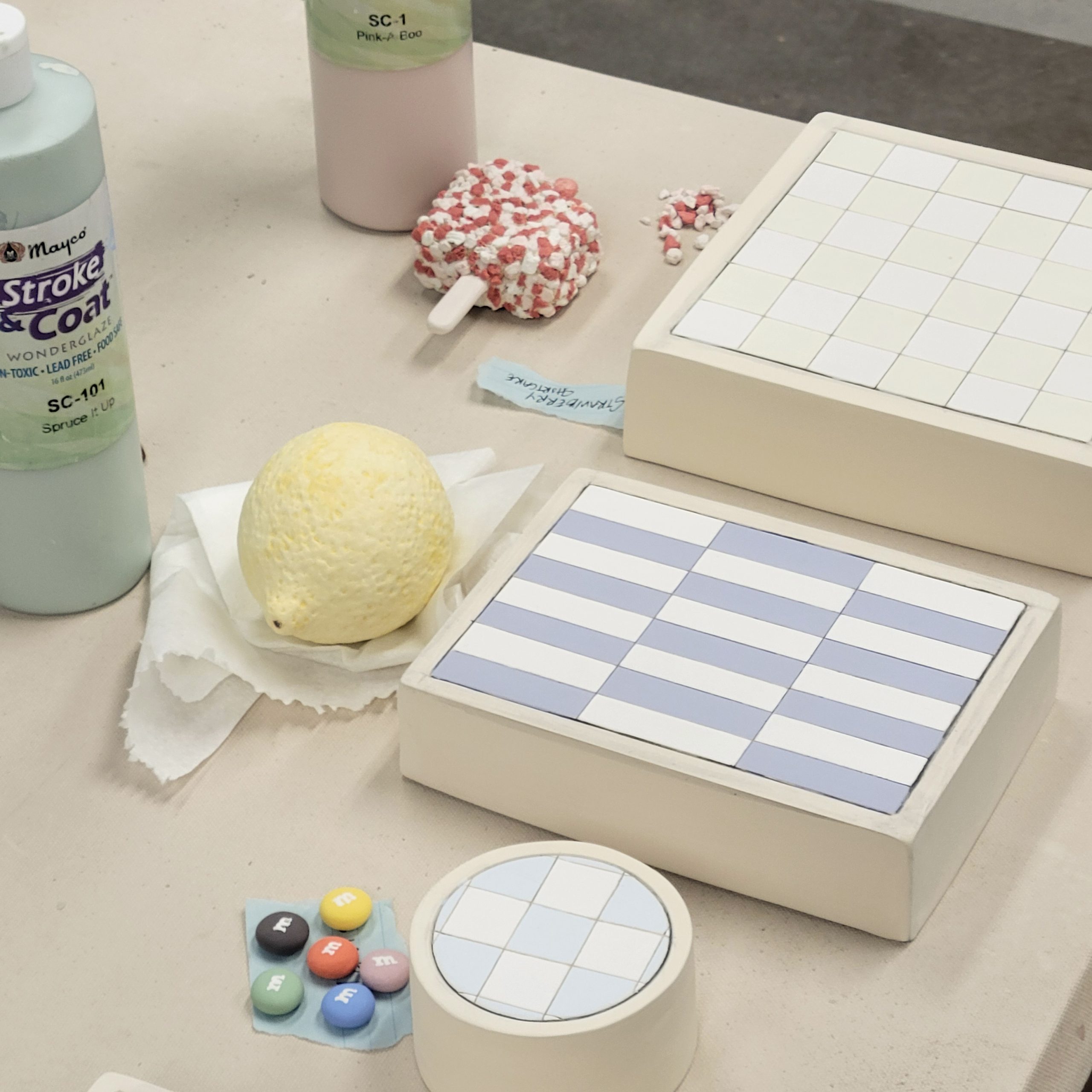
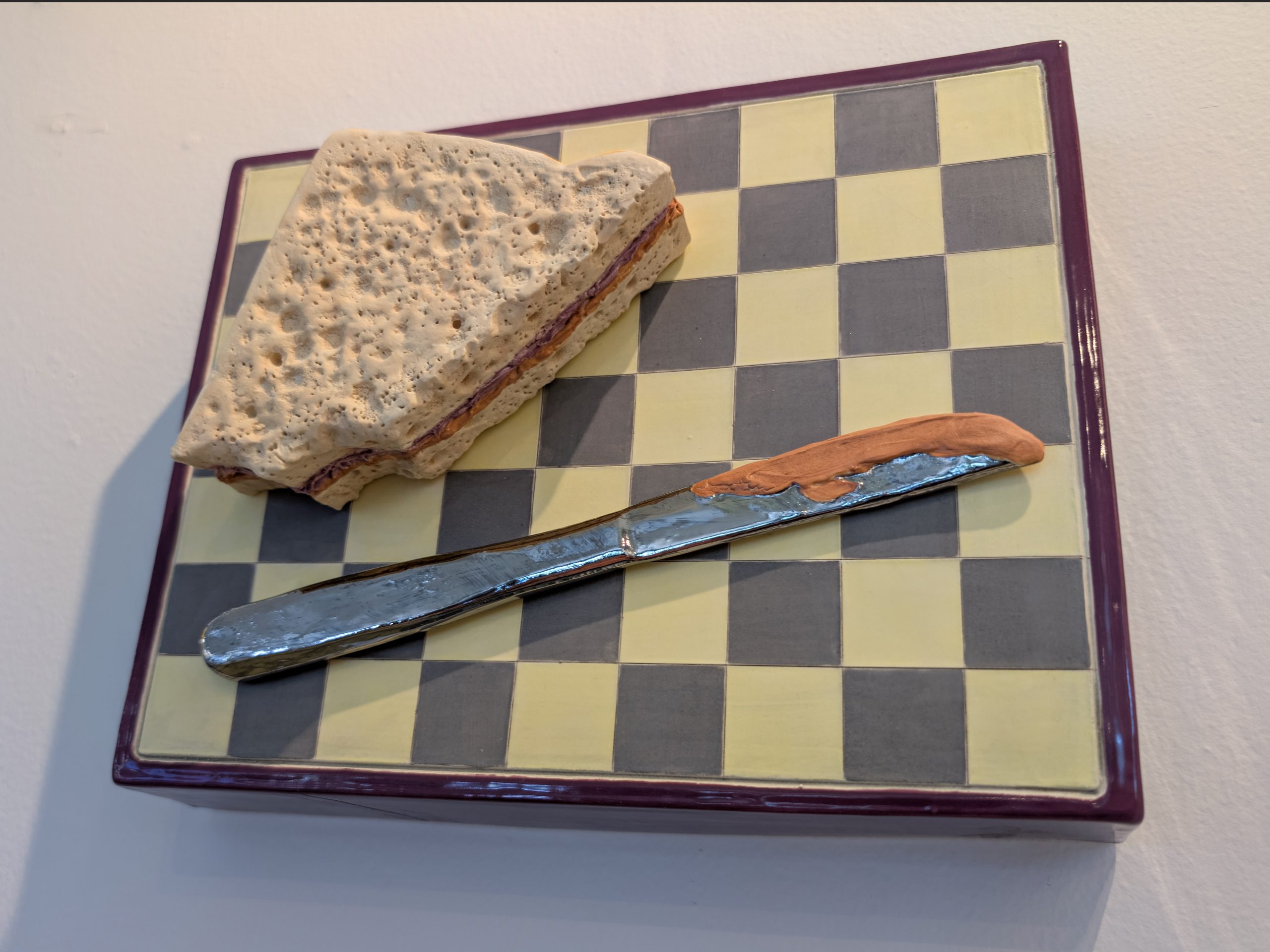
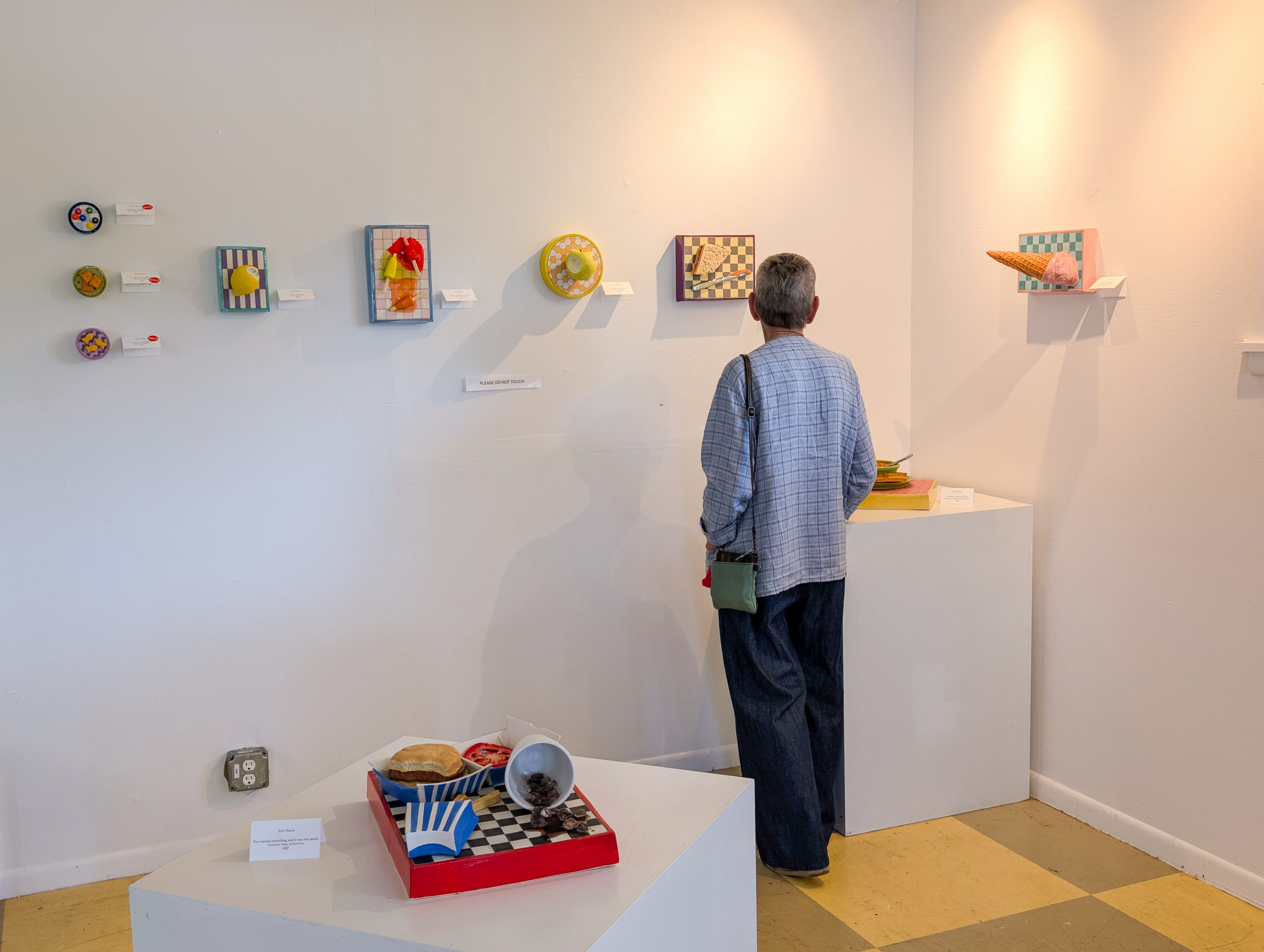
Erin Harris, an artist and ceramics instructor from Oklahoma City, used slab construction and hand-building techniques to turn food-related memories into remarkably realistic ceramic objects. Ice cream cones, fruit, Goldfish crackers, bitten cookies, grilled cheese, and other familiar foods appeared throughout her work.
At first glance, Erin’s work is colorful, playful, and almost funny. But the titles tell another story. A discarded orange peel becomes You took the best parts of me. A fallen ice cream cone says I tried to hold on. Melting popsicles ask Am I worth the mess? and a molding lemon quietly announces I had a purpose.
The titles bring a surprising sadness to objects that might otherwise feel nostalgic or silly. Suddenly, the melting, spilling, molding, and half-eaten food feels a little more personal. They’re still familiar snacks, but now they have something to say about being used up, making a mess, or getting left behind.

Erin’s ceramic circus animal cookies before color and firing.
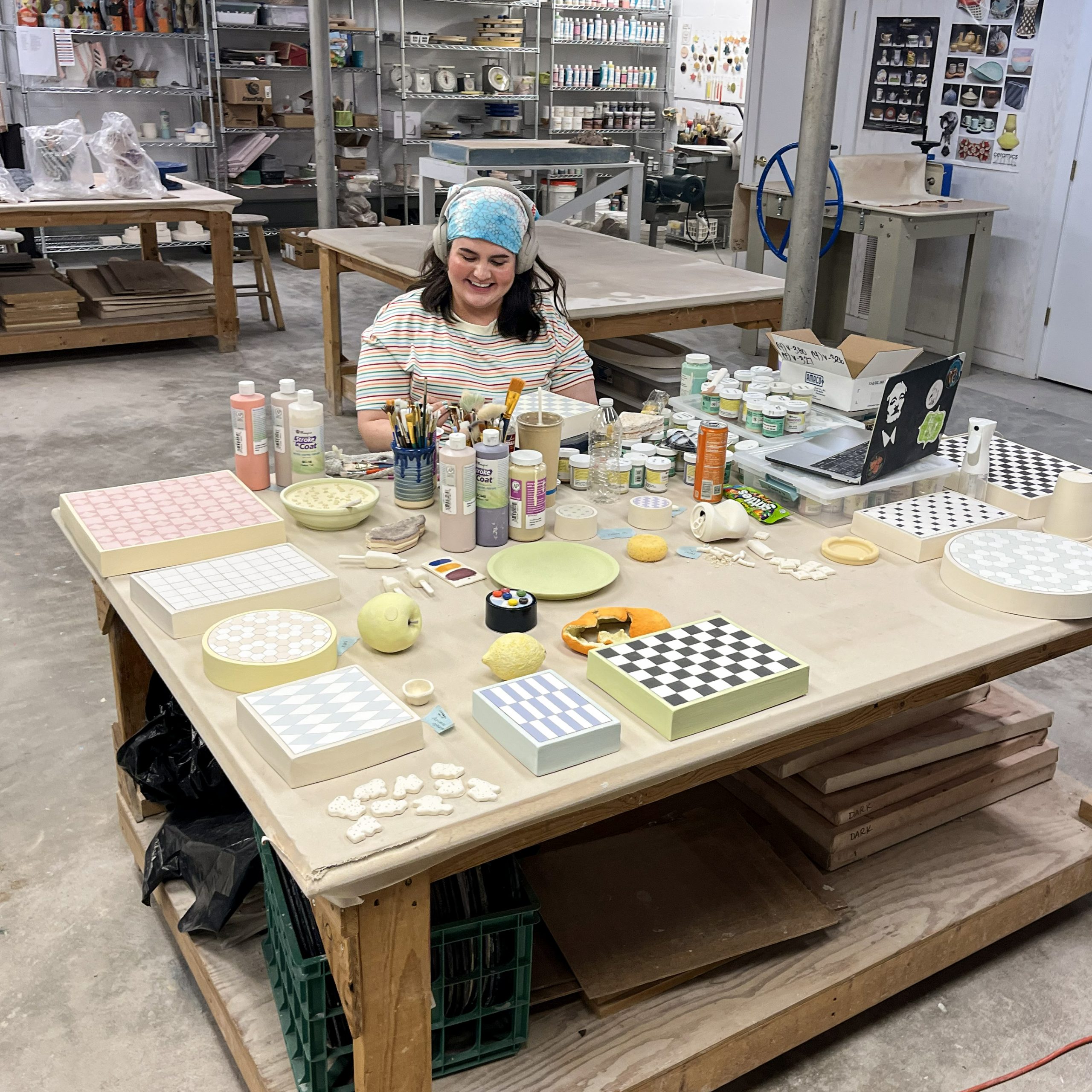
Food sculptures and patterned display forms taking shape on Erin’s studio table.
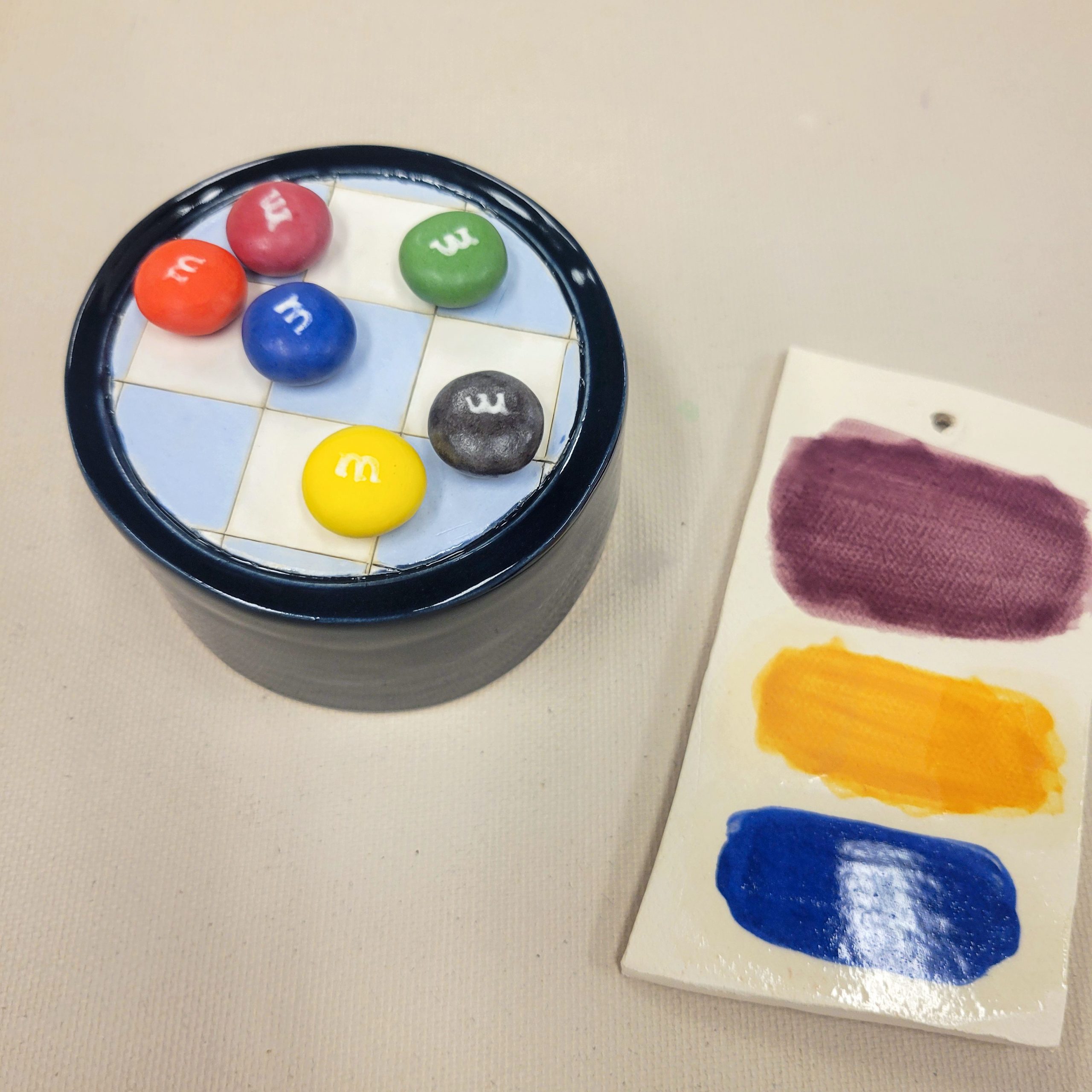
Ceramic candies alongside tests for color and finish.
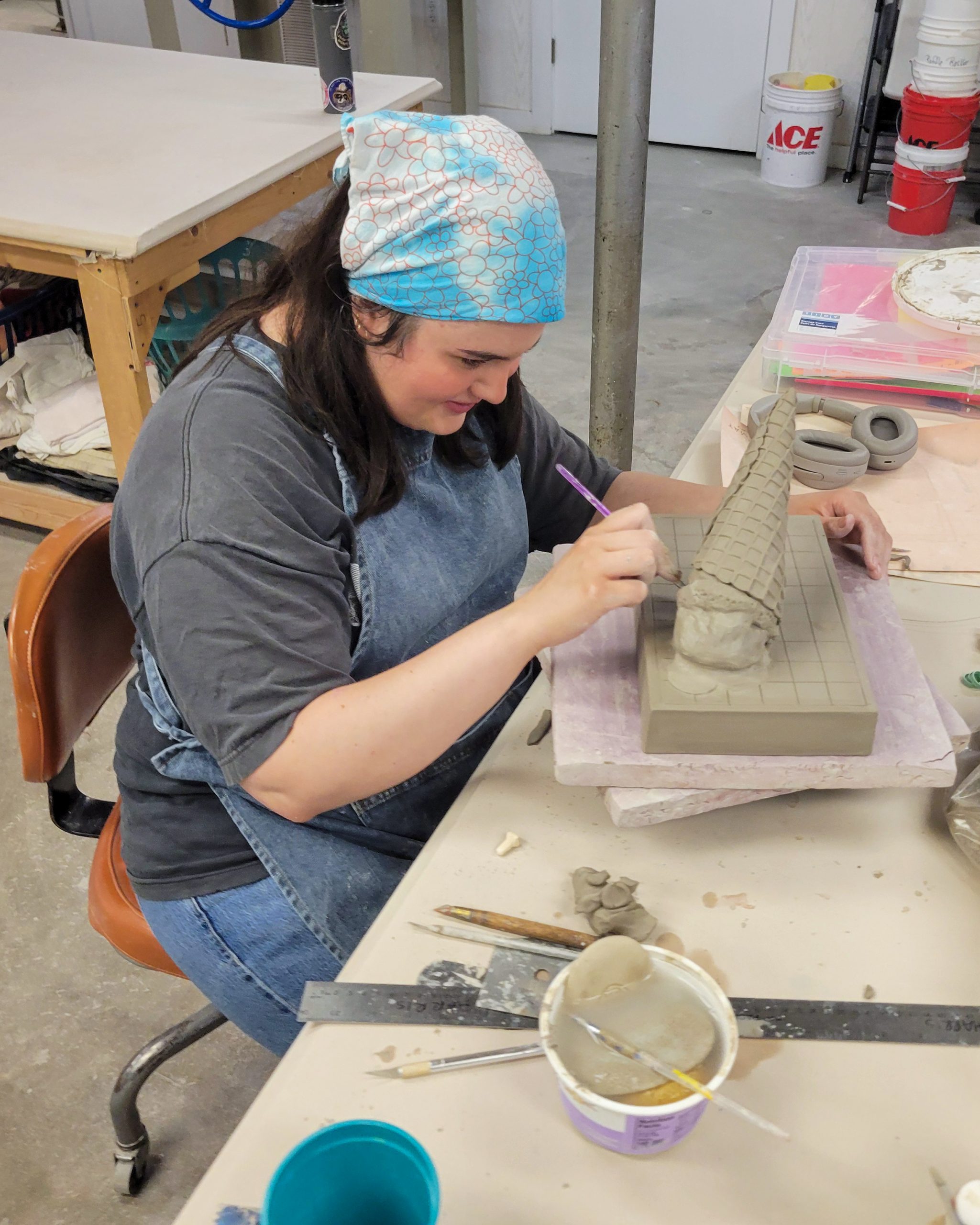
Erin Harris at work among pieces in various stages of completion.
Making those familiar foods look convincing required plenty of experimentation. Erin mixed baking soda with water to create the porous texture of bread and used UV resin to recreate the glossy puddle of spilled soda. Details like these make the objects feel real enough to stir up memories before their titles pull you somewhere deeper.
Before arriving at ESSA, Erin hoped the residency would give her time away from the demands of teaching to concentrate fully on her own projects. That focused studio time allowed her to test new techniques, strengthen her craftsmanship, and develop a more cohesive body of work.
“My time at ESSA made me a more confident artist.”
-Erin Harris
Beyond the Ceramics Studio
The residency was about more than the time spent in ESSA’s Ceramics Studio. Kaitlyn and Erin toured the new Learning and Engagement Hub at Crystal Bridges with ESSA’s Studio Coordinator, Brynna Mollahan, where they met and talked with members of the museum’s studio staff. They also toured the Crystal Bridges Museum of American Art and visited The Momentary, Crystal Bridges’ contemporary art space in downtown Bentonville.
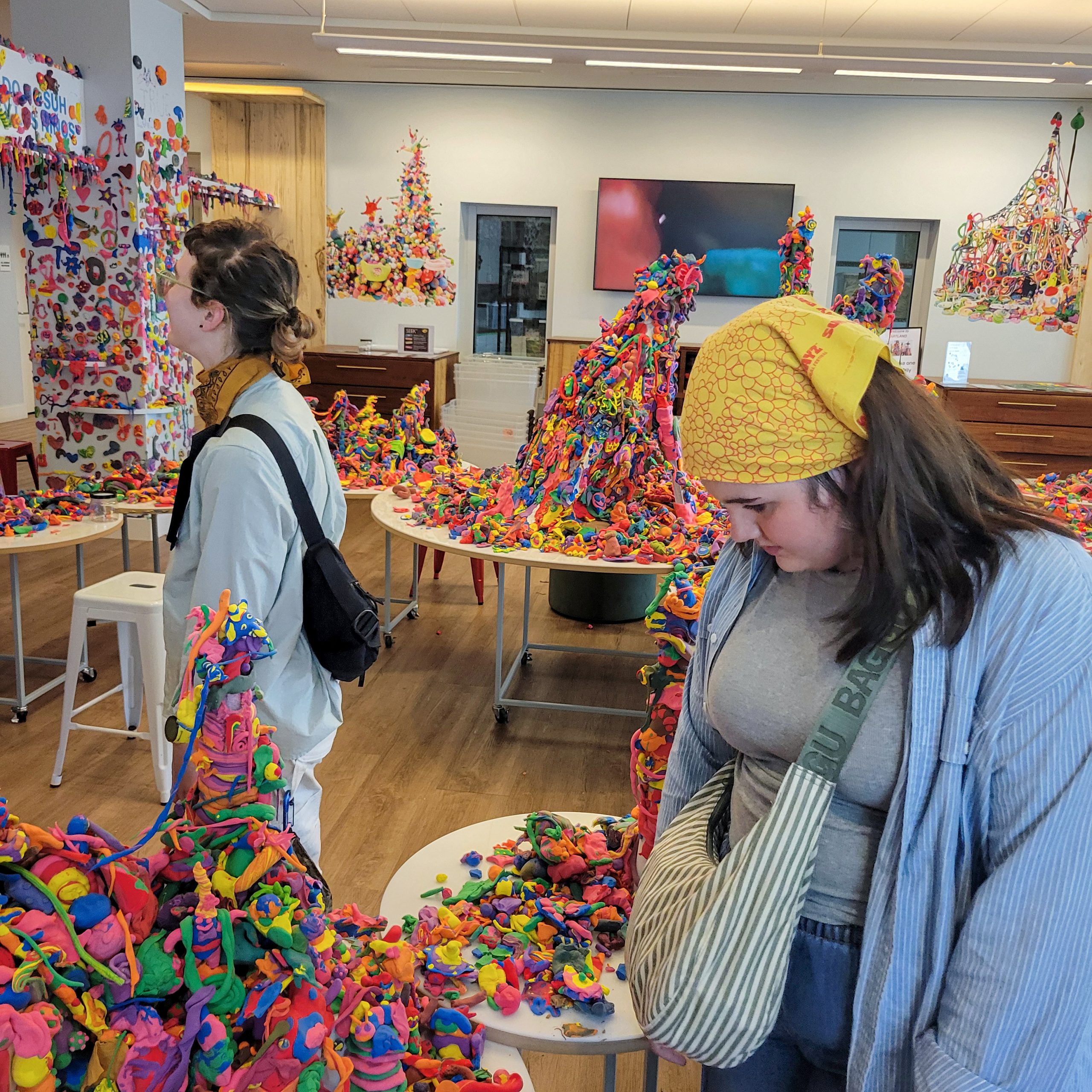
Kaitlyn and Erin explore Do Ho Suh and Children: Artland during their visit to Crystal Bridges.
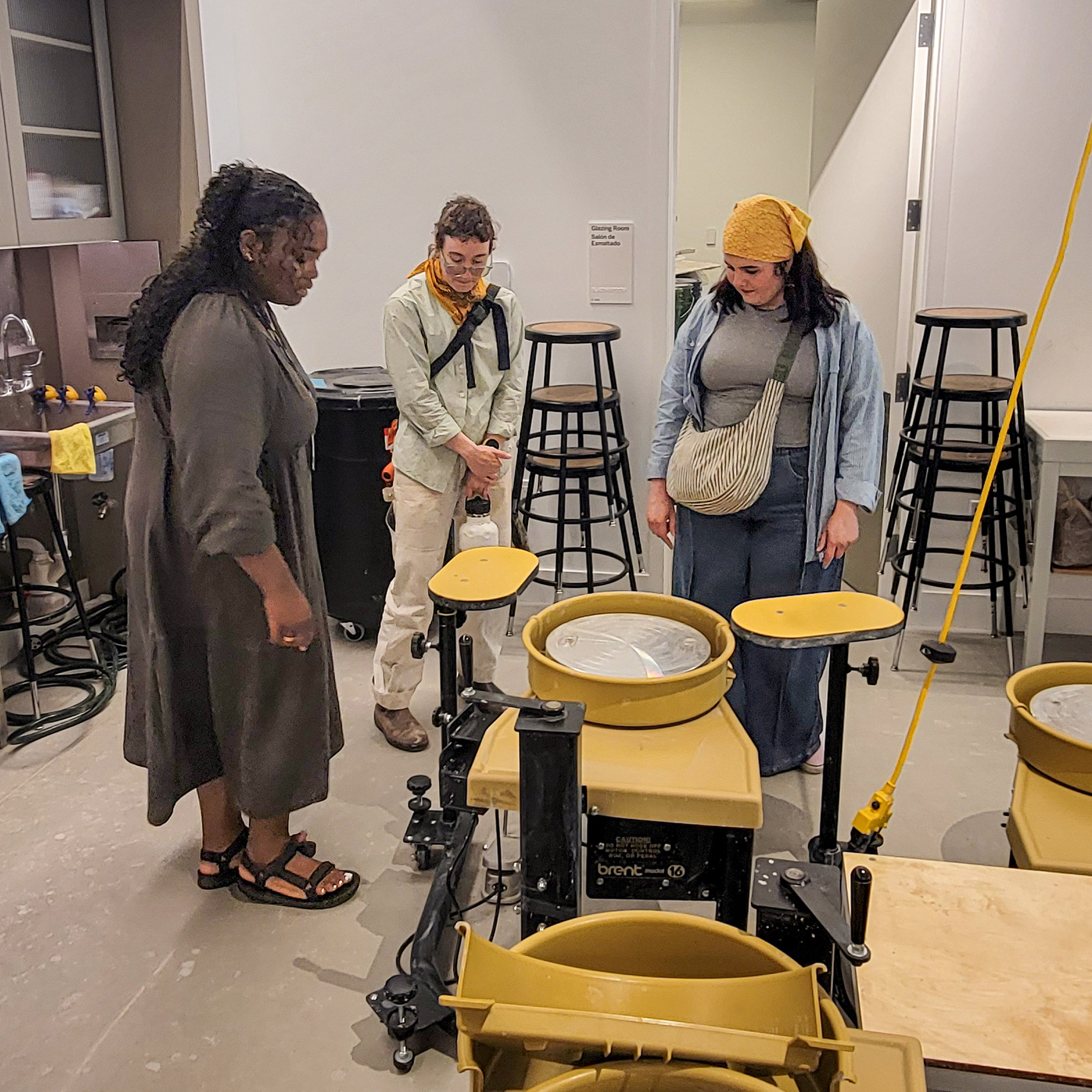
Museum staff member Carlita shows Kaitlyn and Erin an accessible pottery wheel during their tour of the Hub at Crystal Bridges.
For a short stretch, the ceramics residency also overlapped with ESSA’s Mentored Woodworking Residency. Kaitlyn and Erin met the woodworking residents, spent time talking about their work, and got to see what another group of artists had been making on campus.
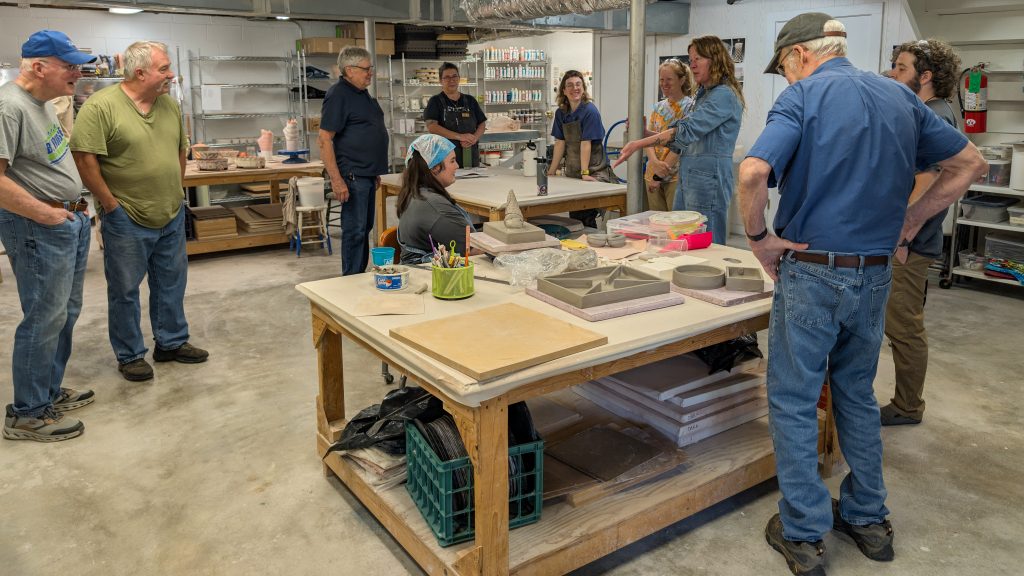
ESSA’s Ceramics and Mentored Woodworking Artists in Residence spend time together in the Ceramics Studio during a scheduled meet & greet.
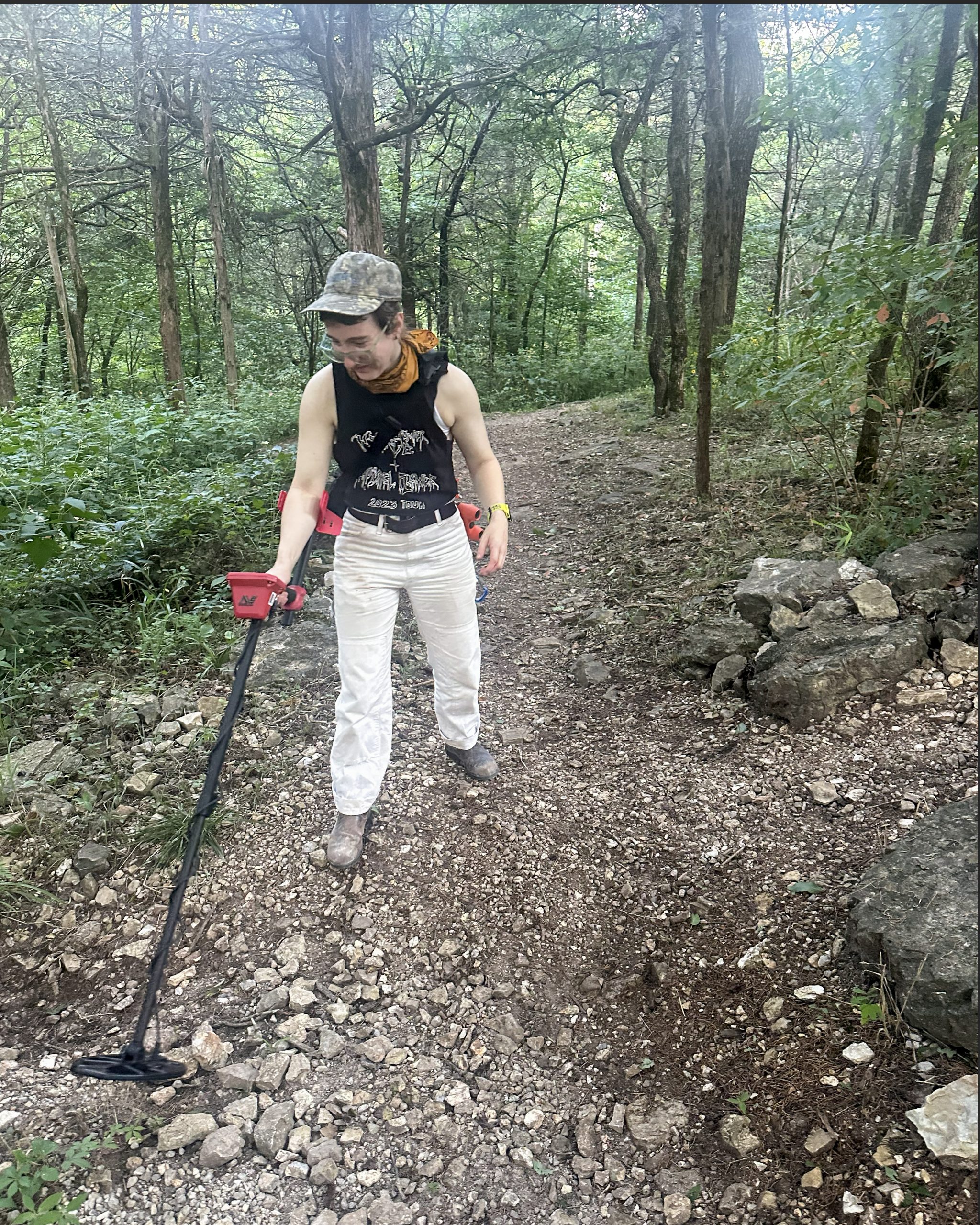
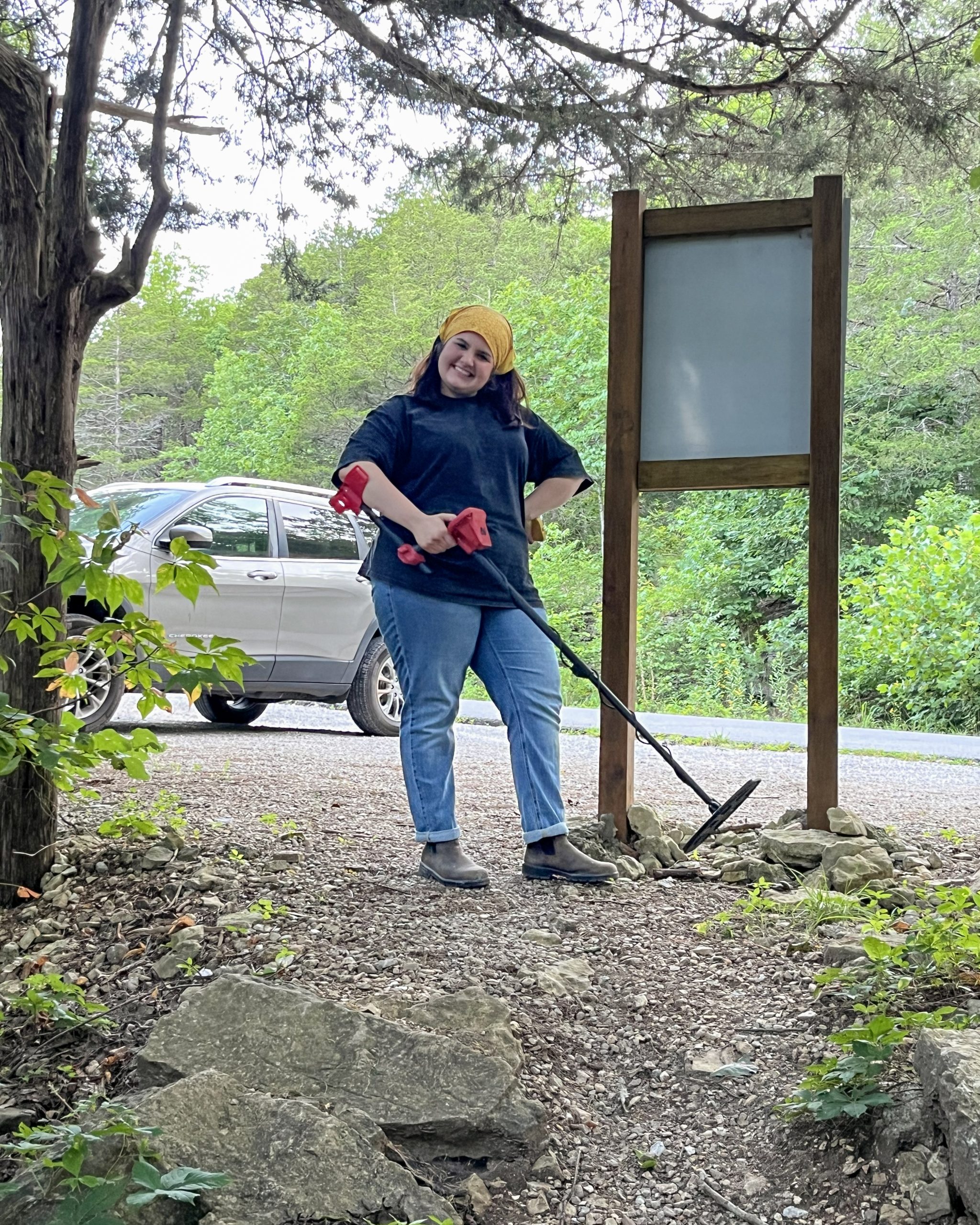
When they needed a change of scenery, Erin’s metal detector came along on hikes and creek-bed excursions around Northwest Arkansas. The two artists also shared meals with ESSA staff and spent Thursday mornings visiting the local farmers market, picking up local food and getting to know the community beyond campus.
Those informal experiences are part of what a residency makes possible. Time in a new place does not stay neatly separated from studio work. Conversations, landscapes, meals, and unexpected finds all become part of the experience an artist carries home.
Kaitlyn searches along a wooded trail with Erin’s metal detector.
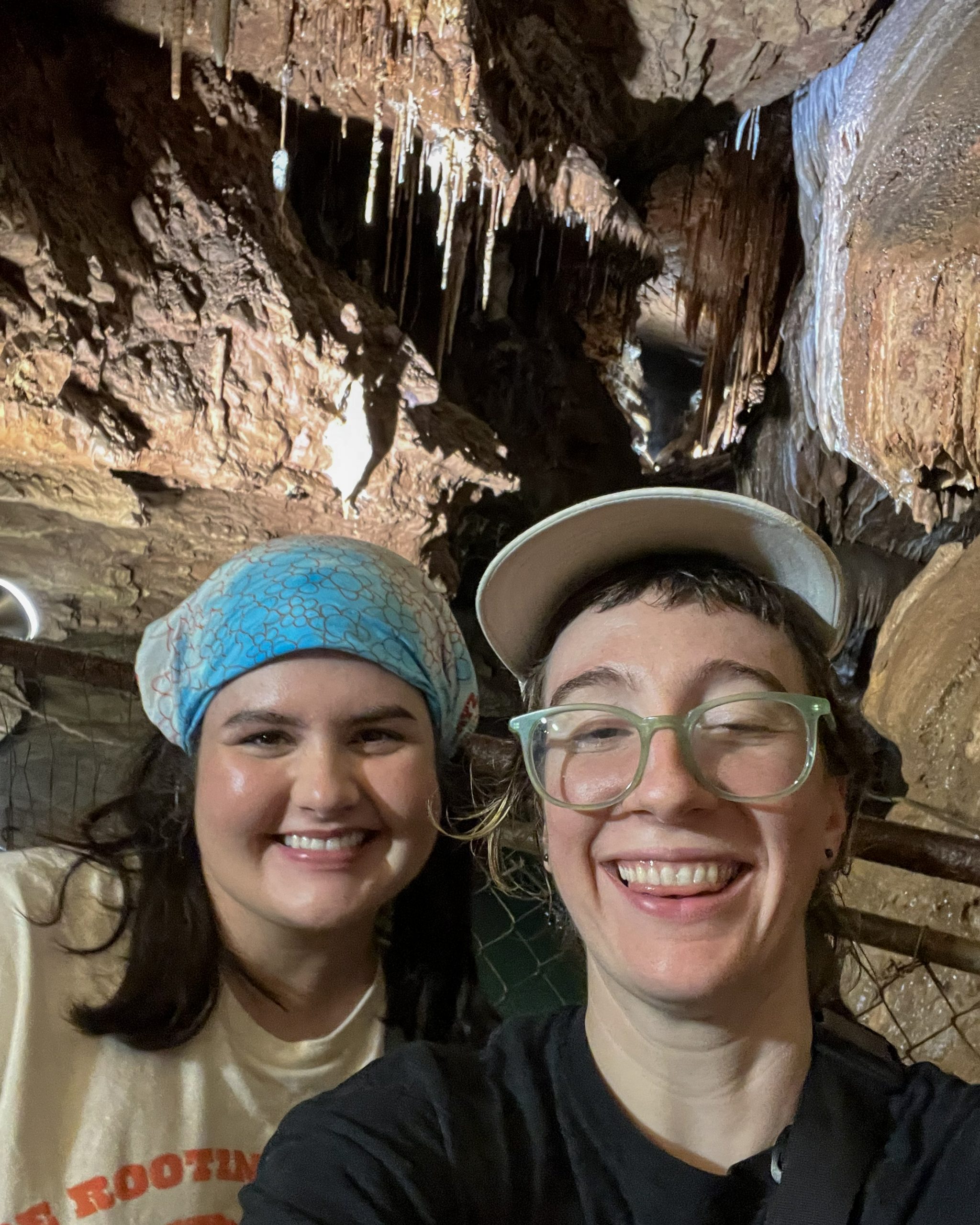
Erin and Kaitlyn take a break from the studio to explore Northwest Arkansas.
Erin brought along a metal detector for outdoor excursions during the residency.
Opening the Studio Doors
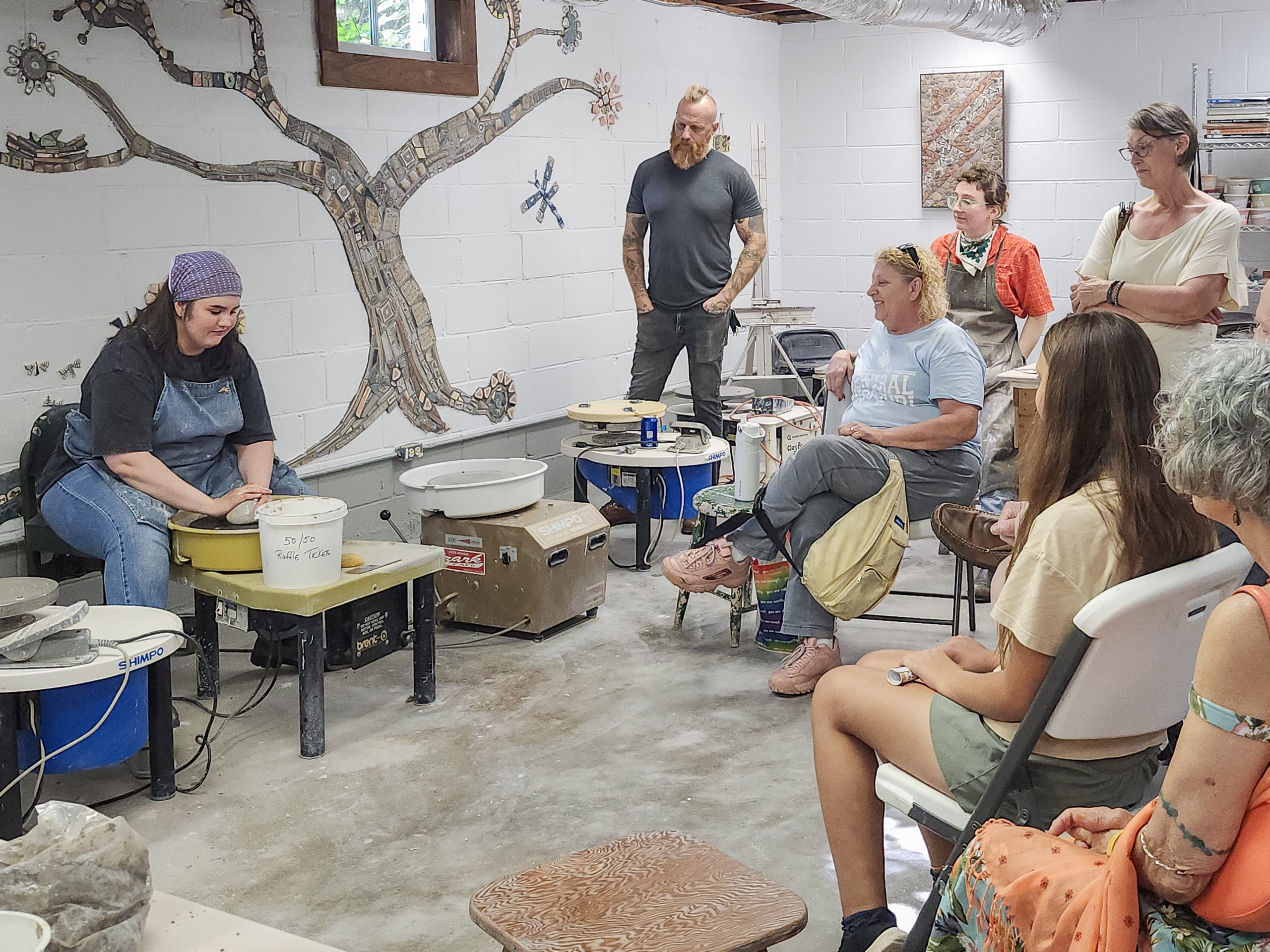
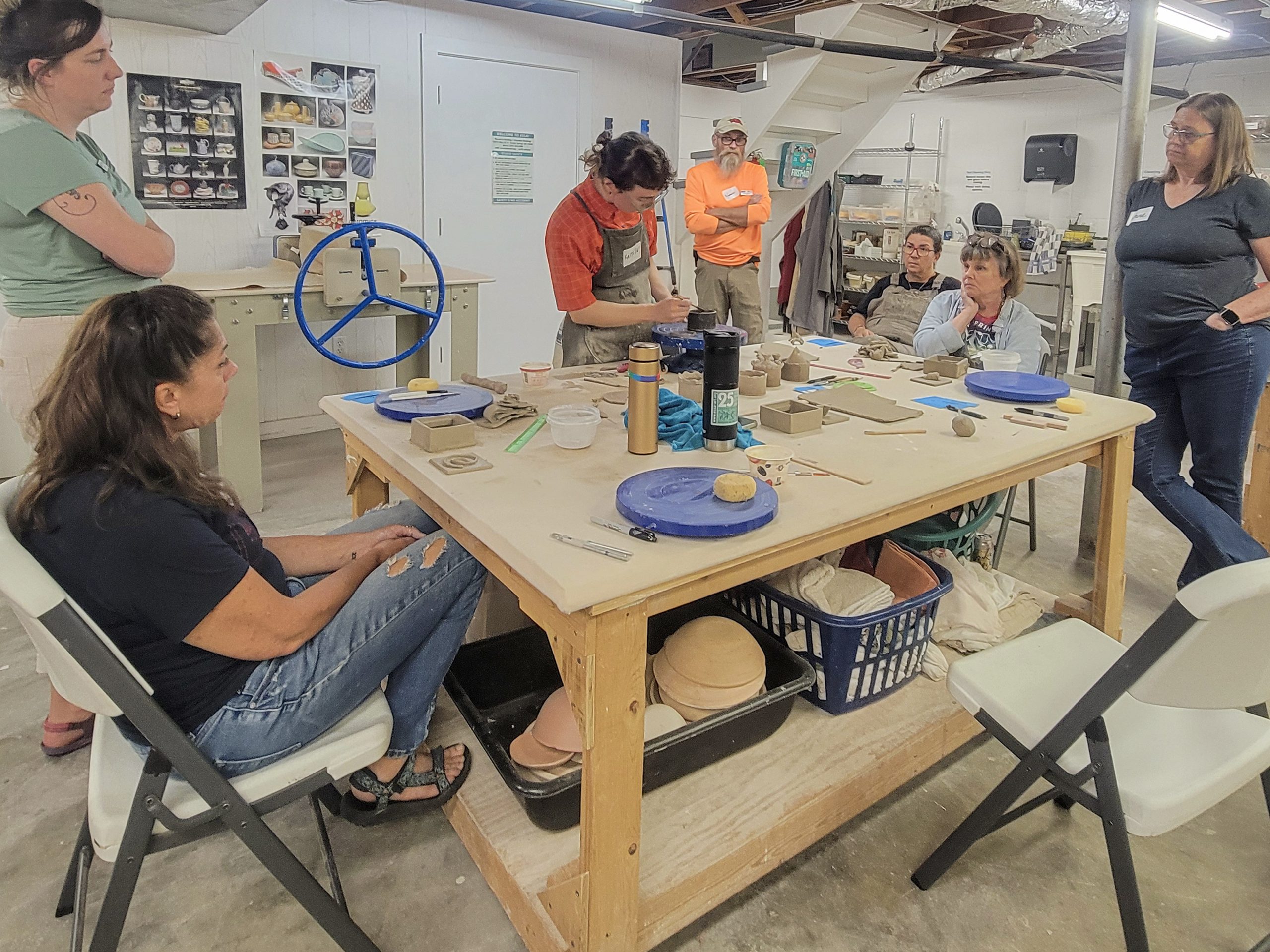
Kaitlyn and Erin also taught a ceramics class for ESSA staff, turning the tables and putting the residents in the role of instructors. Staff traded their usual campus duties for clay, tools, and a little creative experimentation of their own.
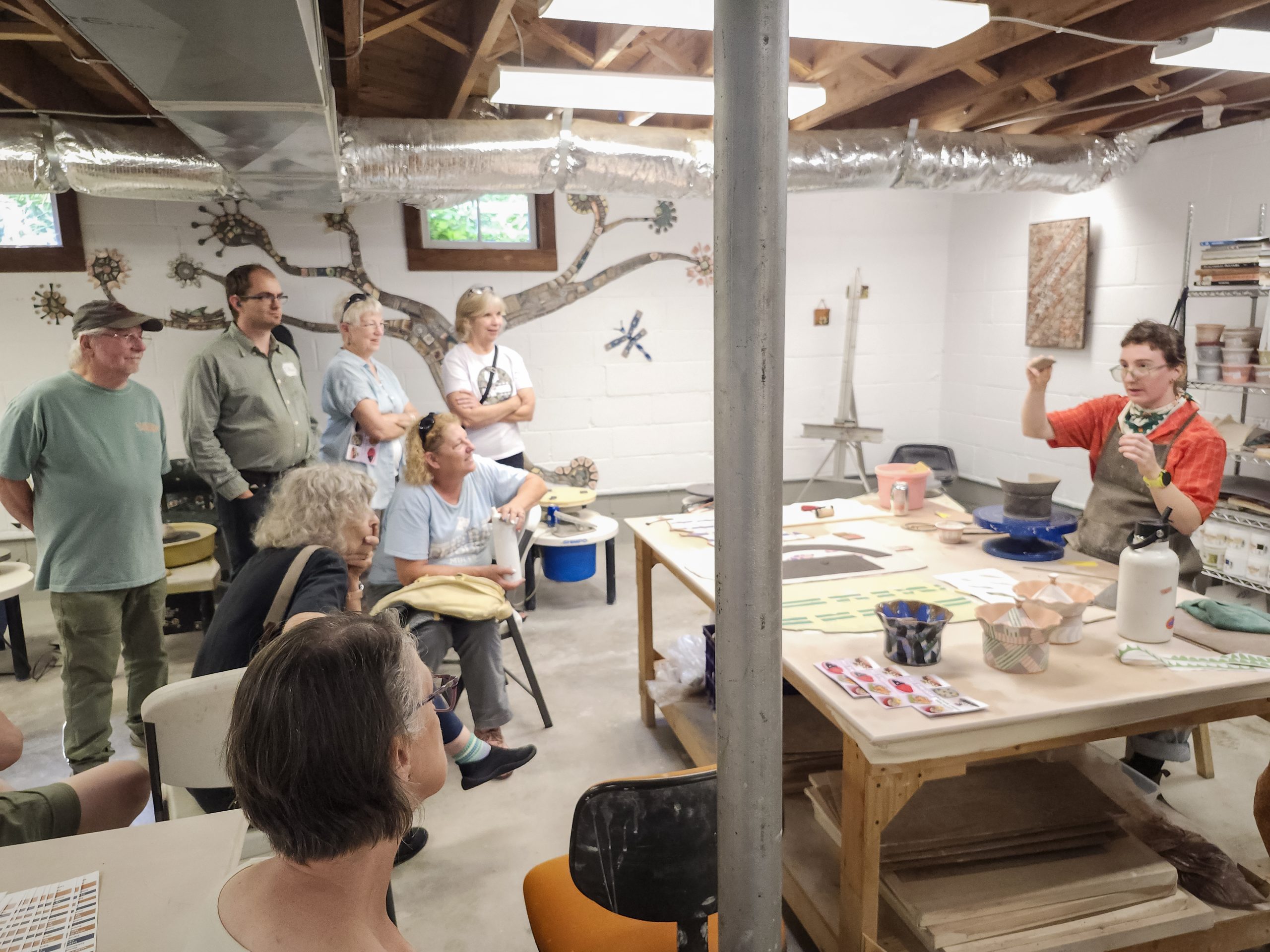
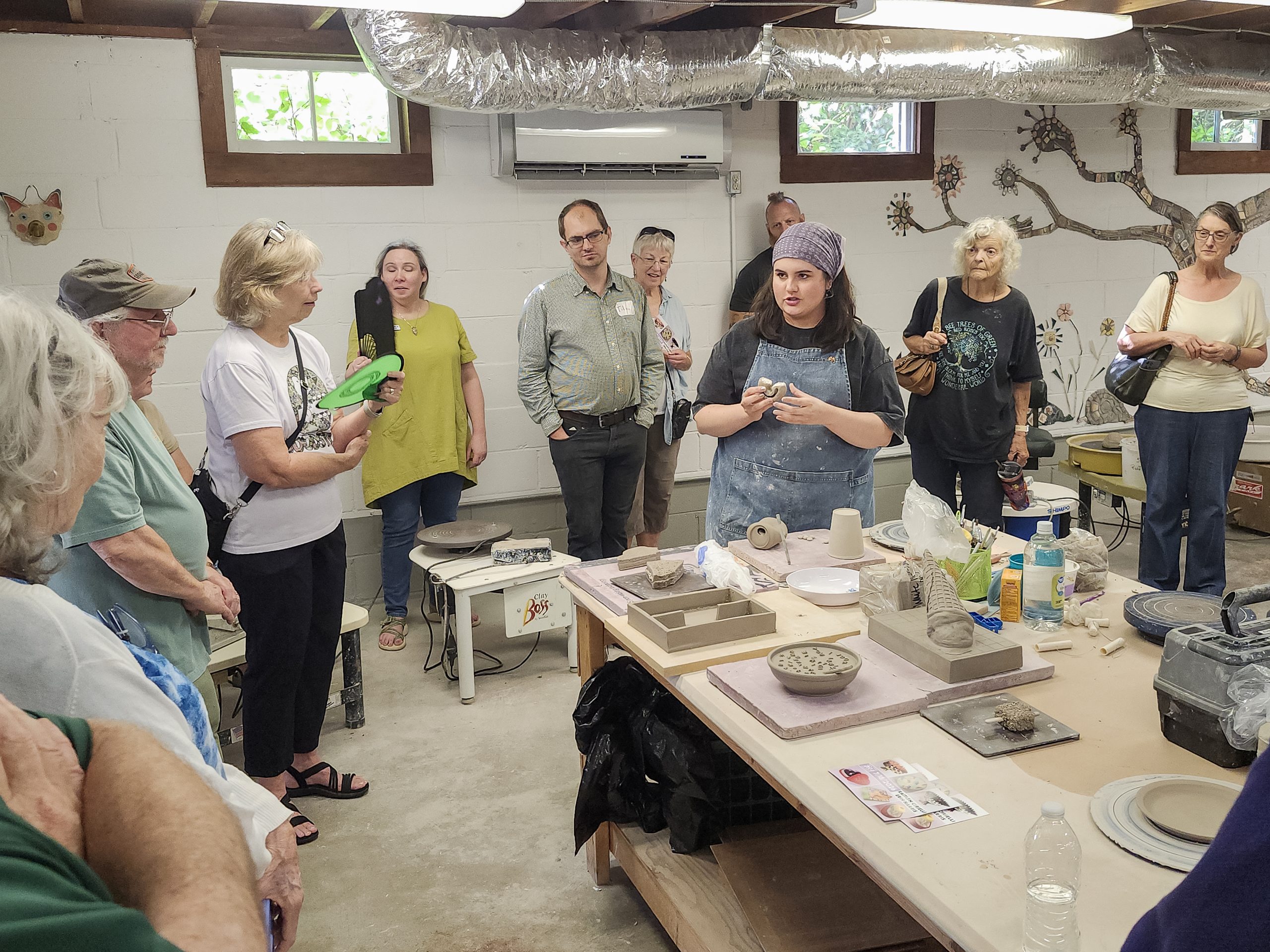
Throughout the summer, Kaitlyn and Erin shared their work with the public at three events. During the Summer Studio Stroll on June 27th, visitors saw works in progress, watched demonstrations, and asked the artists about their materials and processes. On July 11th, Meet the Artists offered a relaxed afternoon inside the Ceramics Studio before the work was presented in its finished form.
“I really enjoyed being able to teach ESSA staff and being able to chat with people during the studio strolls.”
-Erin Harris
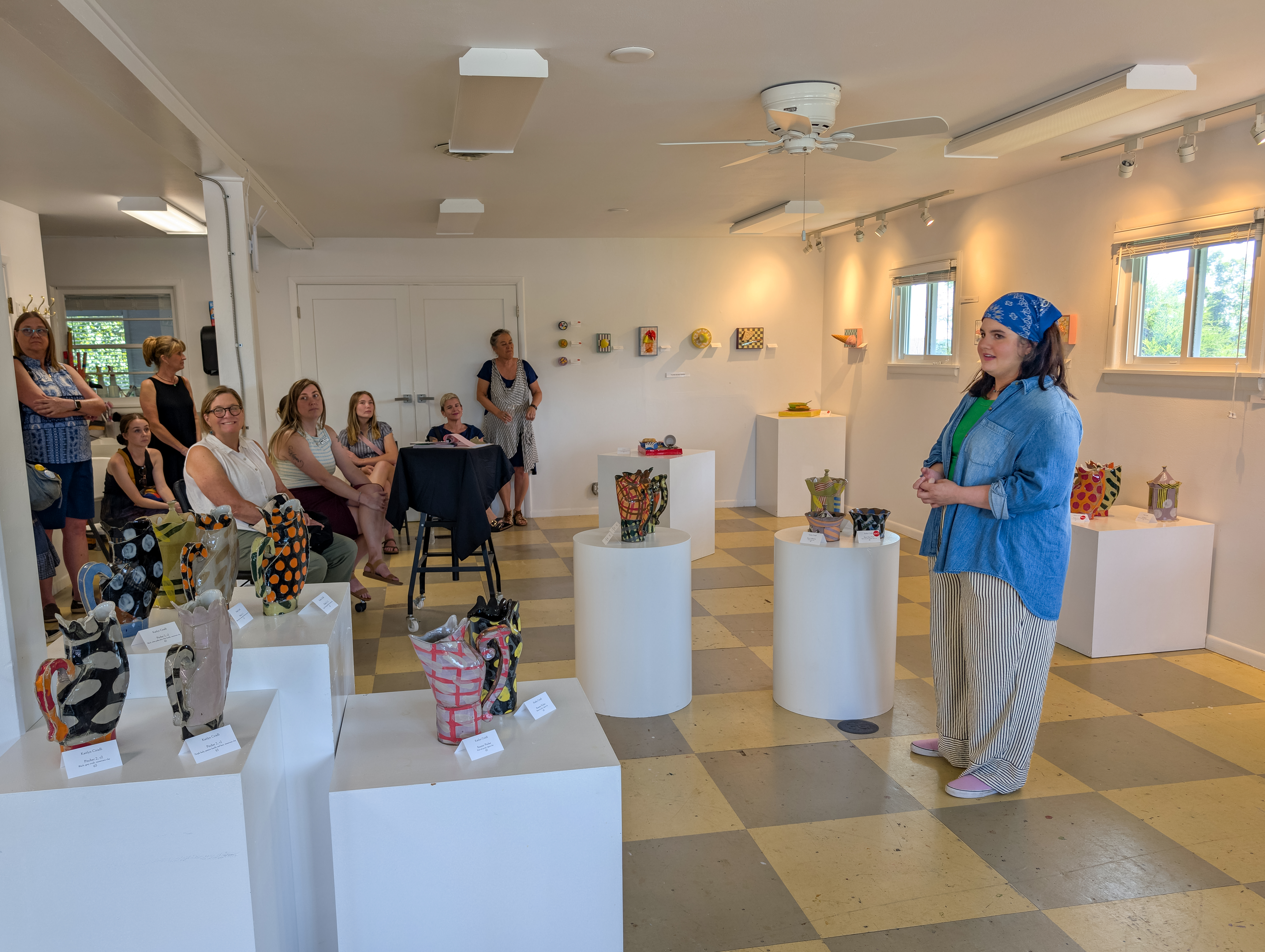
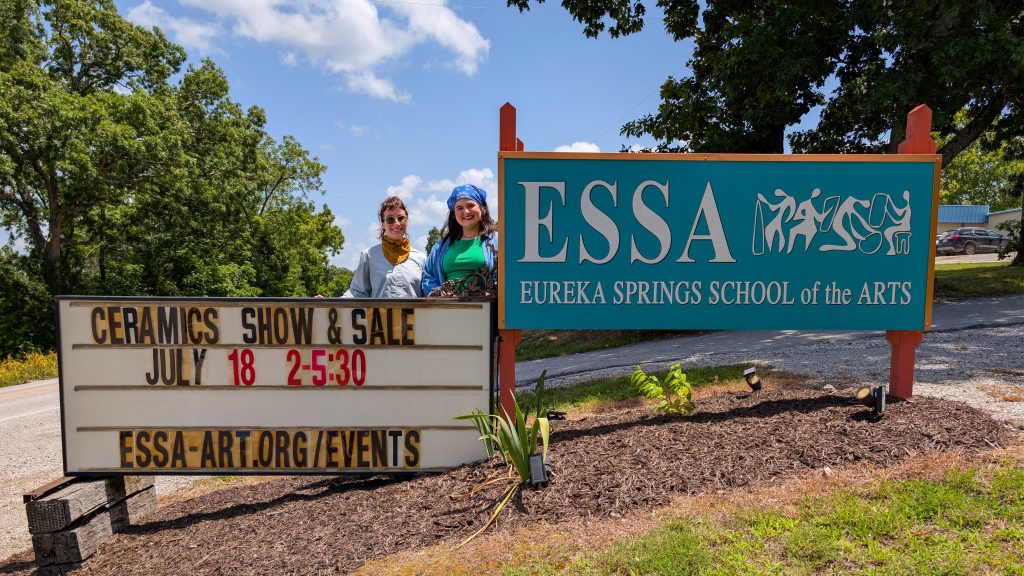
The residency concluded on July 18th with an Artists in Residence Reception, artwork sale, and artist talk. The reception gave visitors a final opportunity to see how seven weeks of concentrated studio time had shaped each artist’s work and to hear Kaitlyn and Erin reflect on the experience in their own words.
A Few Pieces Are Staying Behind
Kaitlyn and Erin each donated several pieces from their residencies to ESSA’s 2026 Mad Hatter Ball Art Auction. Their work will help raise funds for ESSA while finding new homes beyond our campus.
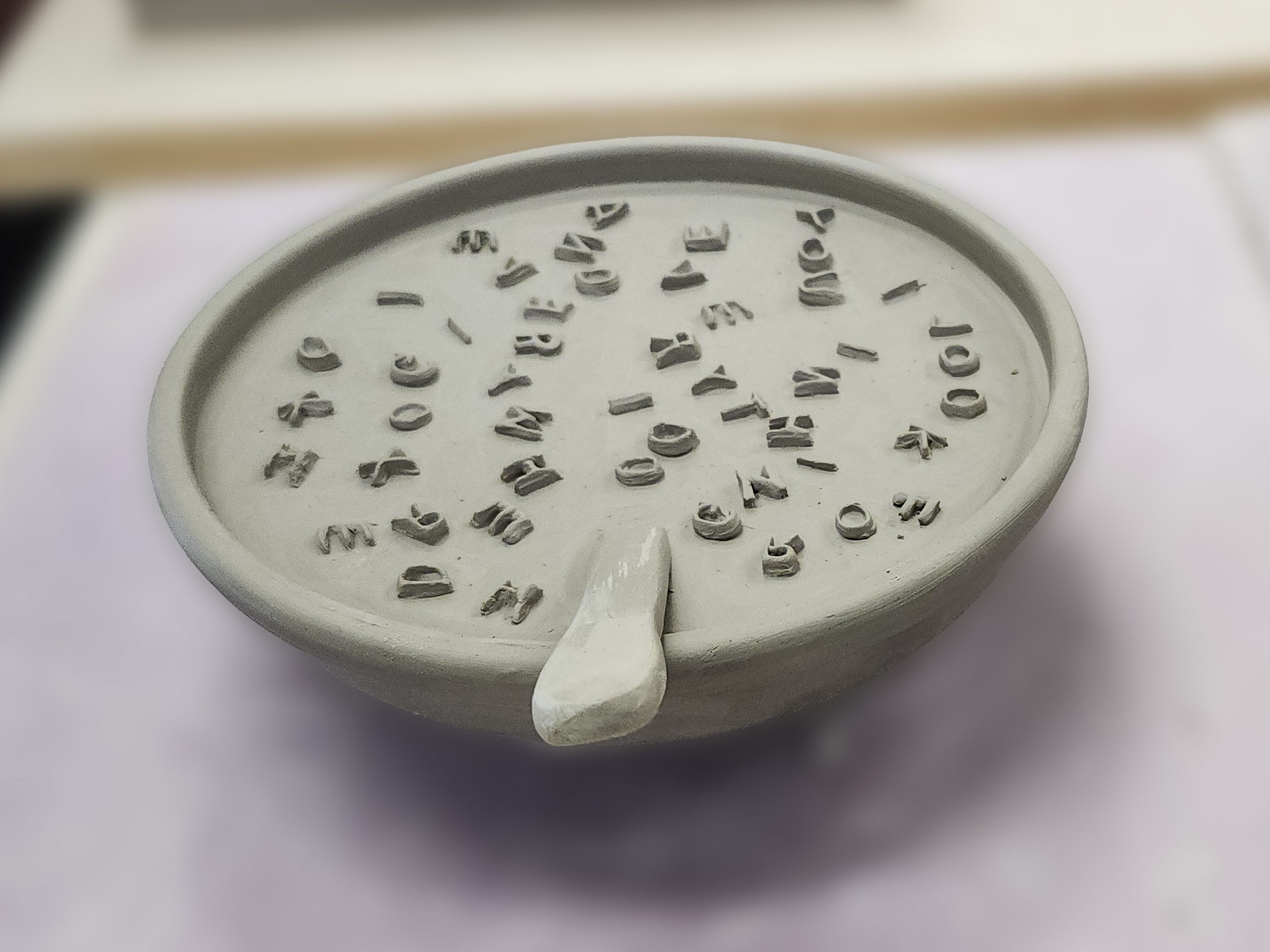
Erin Harris has donated her piece, "You Will Always Have a Special Place in My Heart" to ESSA’s 2026 Mad Hatter Ball Art Auction.
Kaitlyn Cirielli donated this untitled pitcher from her ESSA residency series to the 2026 Mad Hatter Ball Art Auction.
Seven Weeks, and Still Not Quite Enough
When Erin was asked what she would change about the residency, her answer was simple:
“The only thing I would change is to make the residency 8 weeks!”
-Erin Harris
After seven weeks of making, teaching, experimenting, and becoming part of the ESSA community, one more week sounded pretty good.
Add Kaitlyn’s reflection on her time at ESSA, what she gained, or what she hopes to carry into her future work and teaching.
A guest takes in Erin Harris’s work during the Artists-in-Residence Show and Sale on July 18th, 2026.
A guest looks through Kaitlyn Cirielli’s collection during the Artists-in-Residence Reception on July 18th, 2026.
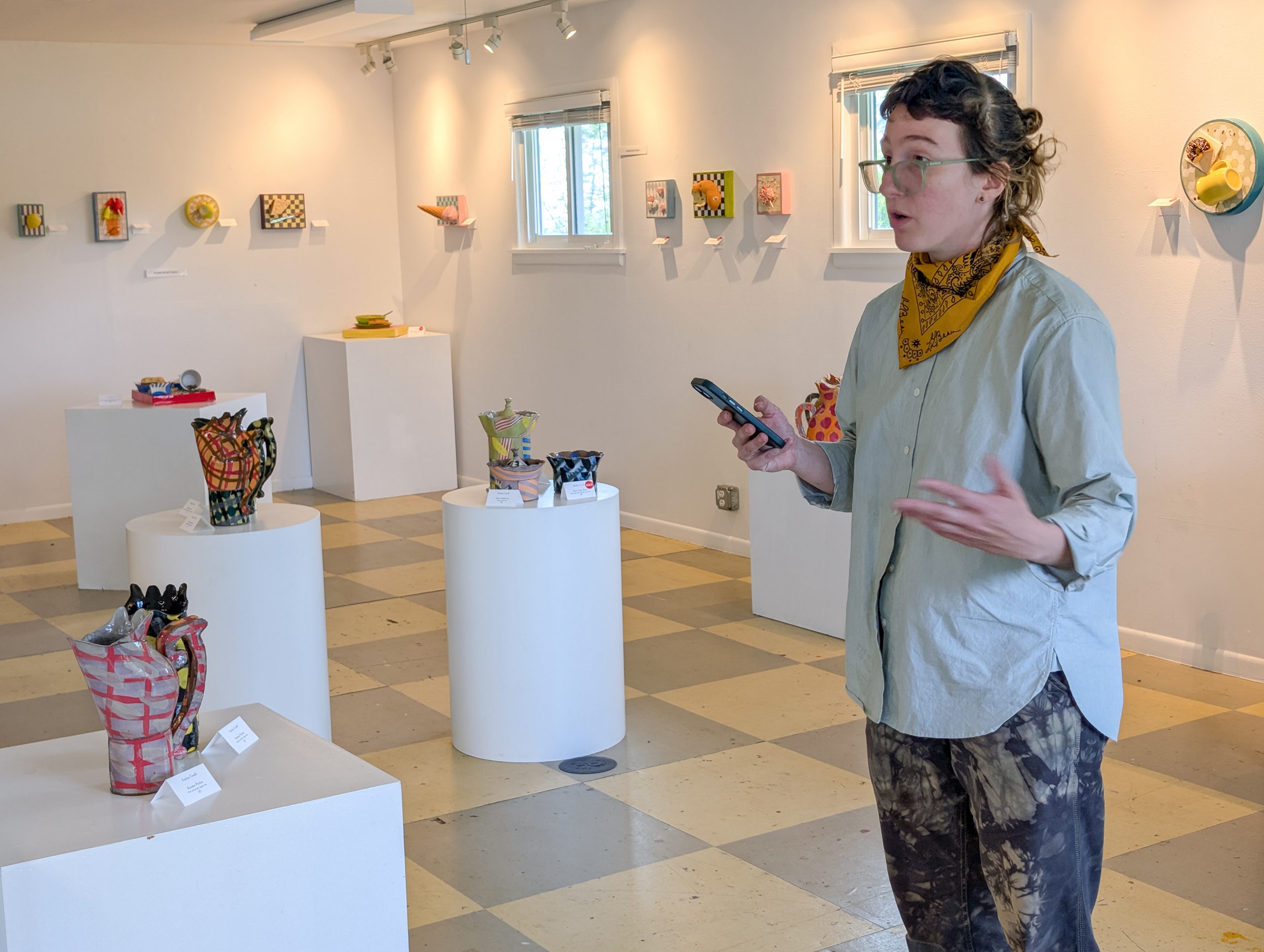
Erin Harris talks about her work and takes questions during the Artist Q&A on July 18th, 2026.
Kaitlyn Cirielli discusses her work and takes questions during the Artist Q&A on July 18th, 2026.
Kaitlyn and Erin arrived with different histories, different processes, and different questions for the material. Their time at ESSA gave those questions room to grow. Kaitlyn transformed patterned clay slabs into dimensional forms while refining tools for more accessible ways of making. Erin turned everyday foods into objects that carry humor, nostalgia, and personal memories.
Author:Eureka Springs School of the Arts
In the belief that art is vital to the human spirit, the Eureka Springs School of the Arts is committed to cultivate, promote and encourage artistic expression by providing art education opportunities in a unique environment of beauty and creativity.